
What is Branch Circuit?
Branch Circuit is the portion of an electrical wiring system that carries power from the final overcurrent device to outlets, lights, appliances, or other connected loads. A branch circuit includes the circuit conductors, grounding path, and protective device. The circuit breaker or fuse must match the wire size and expected electrical load.
Quick Facts About Branch Circuit
Category
Electrical distribution component
Used for
Powering outlets, lights, appliances, and equipment
Measured by
Voltage, amperage, conductor size, and load
Common confusion
A branch circuit is not the same as the service entrance
Also called
Final circuit, Branch wiring circuit
Often discussed with
Electrical Troubleshooting, Dedicated Circuit Installation
Key Takeaways About Branch Circuit
- A branch circuit runs from a panelboard overcurrent device to connected electrical loads.
- The circuit breaker protects conductors from excess current and must match conductor capacity.
- Dedicated branch circuits serve equipment that needs its own circuit, such as ovens or air conditioners.
- Grounding and bonding provide a low-resistance path during some fault conditions.
- Overloaded branch circuits can cause nuisance trips, heat damage, or fire hazards.
Understanding Branch Circuit

Branch Circuit means part of an electrical system. It starts at a circuit breaker or fuse. It extends to the outlets, lights, appliances, or equipment it supplies. The circuit includes current-carrying conductors and wiring connections. It includes a grounding conductor when required. It also includes overcurrent protection at the panelboard. Service conductors and feeder conductors supply the panel. The branch circuit sends power from that panel to final loads.
Related glossary terms: Circuit, Electrical Grounding, National Electrical Code.
A branch circuit may serve several general-use receptacles and lights. It may also supply one specific appliance.general-purpose circuit commonly serves room outlets and lighting. A dedicated circuit supplies one appliance or piece of equipment. Examples include an electric range, furnace, water heater, or sump pump. The circuit type depends on the load and equipment instructions. It also depends on the wiring method and electrical code rules.
How Branch Circuit Works, Is Measured, or Is Used?
Power travels from the panelboard through the circuit breaker. It moves along the branch-circuit conductors. It then reaches the connected loads. The load draws current when it operates. Many single-phase systems return current through the grounded conductor. The equipment grounding path carries fault current during a fault. This happens when a hot conductor contacts metal parts. The breaker opens the circuit when current exceeds its rating. It does so for a permitted period.
Electricians evaluate a branch circuit by checking its voltage. They check conductor size, breaker rating, load demand, and connection condition. Ohm's Law relates voltage, current, and resistance. Its formula is V = I × R. Power uses the formula P = V × I. This applies to direct-current loads and many simple single-phase calculations. Actual design may also account for motor starting current. It may include continuous loads and voltage drop. It may also include temperature and conductor installation conditions.
A circuit map or wiring diagram helps identify shared devices. Testing may include voltage checks and continuity testing. Continuity testing uses de-energized wiring. Testing may also include polarity verification and grounding checks. Electricians inspect the terminations as well. A tripped breaker doesn't always mean the breaker has failed. An overload, short circuit, or ground fault may be the cause. A loose connection or damaged appliance may also cause it.
Why Branch Circuit Matters?
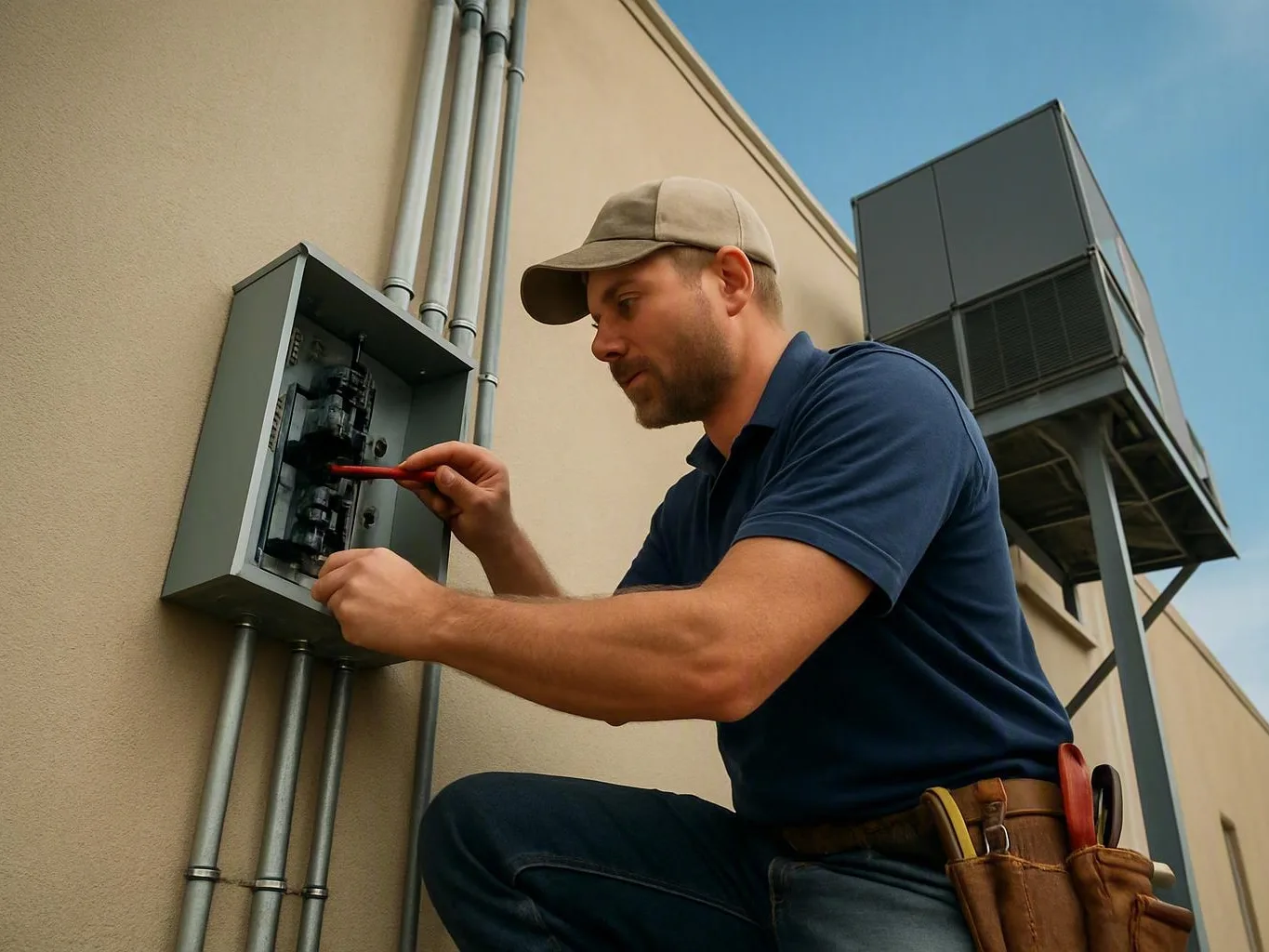
Branch circuits determine how safely electricity reaches everyday equipment. They also affect how reliably it reaches that equipment. A circuit with too much connected load can draw excessive current. That current can create heat in the conductors. It can cause repeated breaker trips and damaged receptacles. It can also cause insulation failure. Correct wire gauge, breaker sizing, and termination torque help control these risks. Proper grounding also helps control these risks.
Branch-circuit design also affects how a building operates. Separating high-demand equipment from general-use outlets reduces nuisance trips. It also makes troubleshooting easier. A properly planned load calculation helps determine circuit capacity. It shows whether an existing circuit can support new equipment. A new circuit, subpanel, or service change may be necessary.
When Branch Circuit Matters Most?
Branch-circuit questions become important during remodeling and appliance replacement. They also matter during home additions and electrical troubleshooting. New equipment may need a different voltage or breaker size. It may need a different conductor size or dedicated circuit. A receptacle may appear close to a panel. It may still share a circuit with distant loads. Physical distance doesn't identify the circuit capacity.
Pay close attention to warm receptacles, buzzing, or discoloration. Watch for burning odors and flickering lights. Repeated breaker trips are also warning signs. A breaker that won't reset is another warning sign. Don't replace a breaker with a larger rating to stop trips. That change can allow the conductors to overheat. Electrical work in Fort Wayne may require permits or inspections. These requirements come from Indiana and local rules. This especially applies to new wiring or major alterations.
How to Evaluate Branch Circuit?
- Confirm the breaker rating, conductor size, circuit voltage, and connected load.
- Identify whether high-demand appliances have dedicated branch circuits.
- Check receptacles, switches, and panel terminations for heat damage or discoloration.
- Verify grounding, polarity, and overcurrent protection with appropriate test methods.
- Ask whether new equipment requires a load calculation, permit, or inspection.
Related Concepts Compared
Branch Circuit vs. Feeder
A feeder carries power from a service or source panel to another panel or distribution point. A branch circuit continues from the final overcurrent device to outlets or equipment.
Branch Circuit vs. Service
The electrical service brings power from the utility connection to the building's service equipment. A branch circuit distributes that power inside the building.
Branch Circuit vs. Dedicated Circuit
A dedicated circuit is a type of branch circuit that serves one appliance or piece of equipment. Not every branch circuit is dedicated.
Branch Circuit vs. Multiwire Branch Circuit
A multiwire branch circuit uses two or more ungrounded conductors that share a grounded conductor. It requires correct phasing, connections, and protection.
Expert Note
A breaker rating alone does not prove that a branch circuit is safe or suitable for new equipment. Inspect the conductor size, termination condition, grounding path, load pattern, and installation method before adding capacity.
Common Mistakes or Myths About Branch Circuit
- Replacing a tripping breaker with a larger breaker without verifying conductor size.
- Assuming every receptacle in one room shares only one circuit.
- Adding a high-demand appliance to a general-purpose circuit without checking capacity.
- Ignoring warm outlets, buzzing, flickering, or burning odors.
- Confusing the service, feeder, and branch circuit portions of an electrical system.
Branch Circuit in Practice: A Real-World Example
If both appliances trip the breaker, the issue may be load demand, not a bad breaker.
Related Terms
Circuit
Circuit is a complete path that allows electric current to move from a power source through…
Electrical Grounding
Electrical Grounding is a safety system that connects electrical equipment and circuits to the earth or…
National Electrical Code
National Electrical Code is a safety standard for electrical design, installation, and inspection in homes, buildings…
Chris Miller Electric
Have Questions About Branch Circuit?
Contact Chris Miller Electric for practical guidance on Branch Circuit and related electrician work in Fort Wayne.