How Long Does It Take to Rewire a House in Fort Wayne, IN?
Whole-home rewiring usually takes several days to a few weeks. House size, wiring access, and damage can change the timeline. Panel upgrades, permits, inspections, and wall repairs also affect the schedule. A simple project may take about 3–5 days. An average house often takes 1–2 weeks. A complex rewire may take 2–4 weeks or longer. Fort Wayne, in scheduling may depend on permit and inspection times. Seasonal demand can also affect the start date. Older homes may need extra work. An electrician should inspect the system before giving a firm timeline. The electrician can also plan code fixes and final testing.
Get a Free EstimateHow Long Does Whole-Home Rewiring Usually Take?
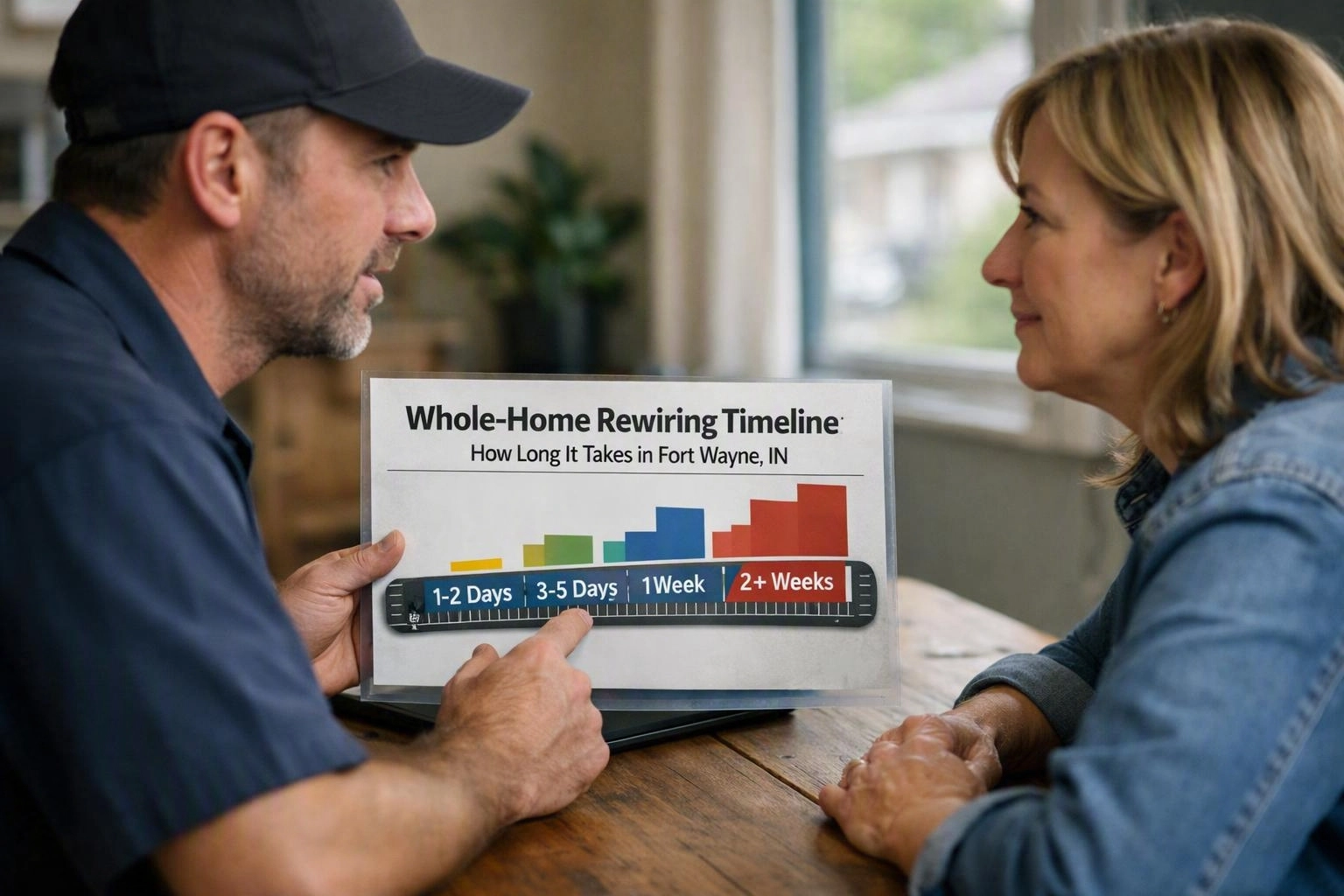
Whole-home rewiring usually takes 3–5 days for simple work. An average house often takes 1–2 weeks. Complex work may take 2–4 weeks or longer. The final schedule depends on house size and wiring access. Circuit count and panel condition also matter. Permits and inspections can add time. Wall repairs may also extend the project.
Chris Miller Electric can inspect the system and explain the work. The team can also help create a clear schedule. These time ranges are planning estimates. They aren't promises. Hidden damage, occupied rooms, and supply delays can change the plan. Required electrical code corrections may also add work.
| Project scope | Typical duration | Common conditions |
|---|---|---|
| Simple electrical rewire | About 3–5 days | Good access, limited circuits, and a serviceable panel |
| Average house rewire | About 1–2 weeks | Several branch circuits, device replacement, and some wall access |
| Complex rewiring project | About 2–4 weeks or longer | Old wiring, difficult access, panel work, code corrections, and finish repairs |
Most projects take several days to a few weeks. A larger home usually takes longer. Many rooms and circuits add more work. Open attic or basement access can save time. Crews may work in stages. This can help keep some power available.
What Can Make a House Rewiring Project Take Longer?
Rewiring takes longer when wall access is limited. Damaged or outdated wiring can also add time. An old panel may need an upgrade. Hidden circuit problems can change the work plan. Code fixes may also be needed. Permits, inspections, and wall repairs can extend the schedule.
The first inspection helps show the full scope. It can reveal a simple replacement or larger electrical work. Our team can explain each safety issue. We can also separate required work from optional upgrades.
Occupied rooms can shorten the daily work time. Furniture may need to move first. Finished surfaces also need protection. Family routines can limit work hours. The calendar may grow, even when labor stays the same.
Which Parts of the House Are Usually Rewired First?
The service panel and main safety path usually come first. Branch circuits follow after that. Receptacles, lighting circuits, and grounding work come next. This order helps the crew map each circuit. It also helps find unsafe areas early.
Work may start at the electrical panel. Circuits are labeled and turned off safely. The team then replaces branch circuit wiring. New receptacles and lighting circuits are connected next. Grounding and bonding are checked as work moves forward.
The exact order depends on access and household needs. Crews may divide the home by floor or room. This can keep some areas usable. Panel or service upgrades may happen early. The new system must support the finished circuits.
What Happens During a Whole-Home Rewiring Project?
A whole-home rewire starts with an electrical inspection. The electrician then makes a circuit plan. Unsafe wiring is removed or isolated. New cables and devices are installed. Panel and grounding work may follow. The system is tested before required inspections.
Before work starts, we review the home's age and electrical history. We check visible wiring and the panel rating. We also discuss known problems. Circuit mapping shows what each circuit powers. This plan helps prevent missed branch circuits.
Crews install new cable through open areas when possible. These areas may include attics, basements, and closets. Unfinished spaces can make the work easier. Drywall access may be needed in finished rooms. Unsafe old wiring may be removed when practical.
Grounding and bonding create safe paths for electrical current. The panel is checked for labels and capacity. Breaker protection is checked as well. AFCI protection and GFCI protection may need updates. Indiana electrical code sets the needed rules.
After device installation, we test the system. Tests may check polarity, grounding, and voltage. We also check breakers and circuit labels. Protective devices are tested too. A permit inspection may happen before walls close.
Next, the team reviews finish work. The crew can point out openings that need drywall repair. Large patching or painting may need another trade. Final electrical testing checks the full system. We also explain new panel labels and safety features.
How Fort Wayne Conditions Can Affect the Rewiring Schedule?
Fort Wayne, IN rewiring times can change for several reasons. Permit and inspection times can affect the schedule. Busy seasons may also limit appointment dates. Older homes may need more work. Indiana electrical code may require panel or grounding fixes.
The permit process can affect each project. Approvals may be needed before circuits are covered. An inspection may also be needed before final work. Local availability affects the inspection date. A finished job may still wait for that visit.
Older homes can take longer to rewire. Wiring may run through plaster or masonry. Boxed framing can hide cable paths. Some homes have hard-to-reach spaces. Old additions may also have unusual wiring.
Indiana electrical code compliance can change the plan. The work may uncover missing grounding. It may also show limited panel capacity. AFCI protection or GFCI protection may be needed. These corrections help the system work safely.
Seasonal demand can make dates less flexible. Winter weather may affect outside service work. It can also affect deliveries and inspections. Our team can plan indoor work first when possible. Weather may still change the full schedule.
When Should You Schedule Electrical Troubleshooting Instead?
Electrical troubleshooting is often the best first step for one clear problem. Signs include flickering lights and repeated breaker trips. Warm outlets, burning smells, and shocks also need attention. Unexplained power loss is another warning sign. An electrician can find the cause. The repair may be small or may require rewiring.
Not every electrical problem needs a full rewire. A loose connection can cause one symptom. A bad device or damaged cable can do the same. An overloaded circuit may also be the cause. Troubleshooting helps find the problem first.
Don't ignore flickering lights or tripping breakers. Take extra care when several rooms are affected. A burning smell or hot outlet needs prompt help. Heat may point to a loose connection or heavy load. Turn off power to the area if it's safe.
We can inspect the panel and branch circuits. We can also check outlets, switches, and visible connections. The result may call for a focused repair. It may also call for a new branch circuit. In some cases, a full electrical system replacement is needed.
Safety comes first when power loss has no clear cause. A shock from a device also needs quick attention. Don't open the panel unless you're qualified. Don't remove covers or damaged devices. A professional can explain the safest next step.
Questions About Electrician
How Many Days Does It Take to Rewire a House?
A simple house rewire may take about 3–5 days. An average home often takes 1–2 weeks. A complex project may take 2–4 weeks or longer. Access, panel work, permits, inspections, and wall repairs affect the final schedule.
Can You Rewire a House Without Removing the Walls?
Often, yes. Electricians may run cable through attics and basements. Closets and other open areas may help too. Some drywall access is common in finished rooms. The home's layout and wiring plan decide how much access is needed.
How Long Does It Take to Rewire an Old House?
An old house may take 1–2 weeks for average work. Complex work can take 2–4 weeks or longer. Knob-and-tube wiring, aluminum wiring, and limited access can add time. Panel upgrades, hidden damage, and Indiana code corrections can also extend the timeline.
Do I Need to Move Out During a Whole-House Rewire?
Not always. Many projects are completed in stages. Power may be off in parts of the home. Work areas may also be dusty or noisy. Temporary relocation may help families with young children, pets, or health concerns.
What Is the Difference Between Electrical Troubleshooting and Rewiring?
Electrical troubleshooting finds the cause of one problem. Examples include a tripping breaker or flickering light. Rewiring replaces unsafe or old wiring. It may cover part or all of a home. Troubleshooting usually comes first when the full scope isn't known.
Our team can review your home and explain the likely work. We can help with permits, inspections, testing, and access needs. Contact Chris Miller Electric to discuss a safe plan.Fort Wayne, IN.
Related Resources
How Much Does an Electrician Cost in Fort Wayne?
electrician cost Fort Wayne IN
What It CostsWhole-Home Rewiring: Cost, Timeline, and What to Expect
whole house rewiring cost Fort Wayne IN
How It WorksWhat to Expect During an Electrical Troubleshooting Visit
electrical troubleshooting electrician Fort Wayne
How It WorksElectrical Inspections and Code Corrections: Costs, Process, and Next Steps
electrical inspection and code correction Fort Wayne