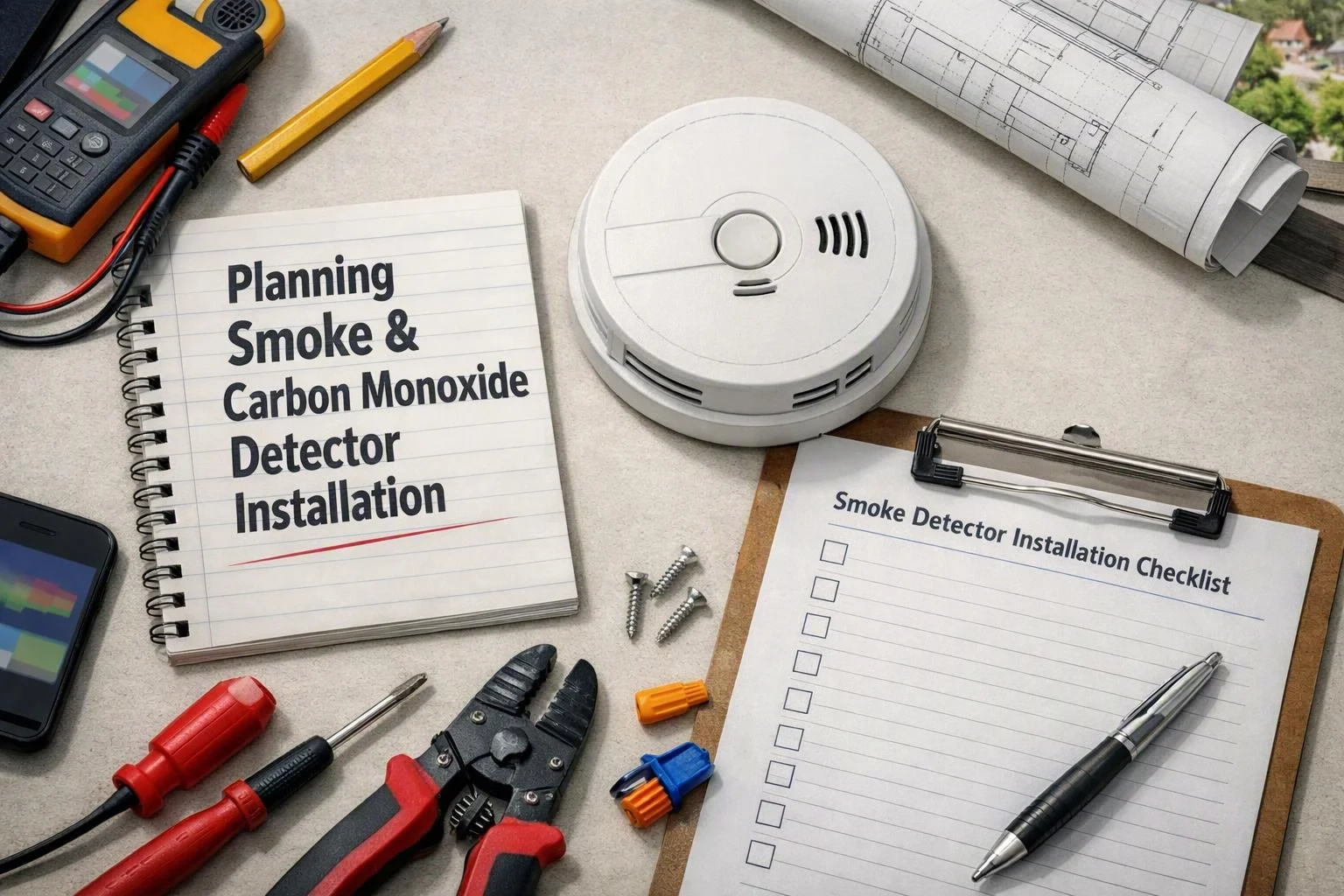
Planning Smoke and Carbon Monoxide Detector Installation
Smoke and carbon monoxide detector installation checklist planning covers detector placement, power sources, interconnection, testing, maintenance, and carbon monoxide coverage; Chris Miller Electric checks these installation details and completes the electrical work.
Request an EstimateWhat Should a Smoke Detector Installation Checklist Include?
A smoke detector installation checklist should cover the detector type, placement, power connection, interconnection, testing, and ongoing maintenance.
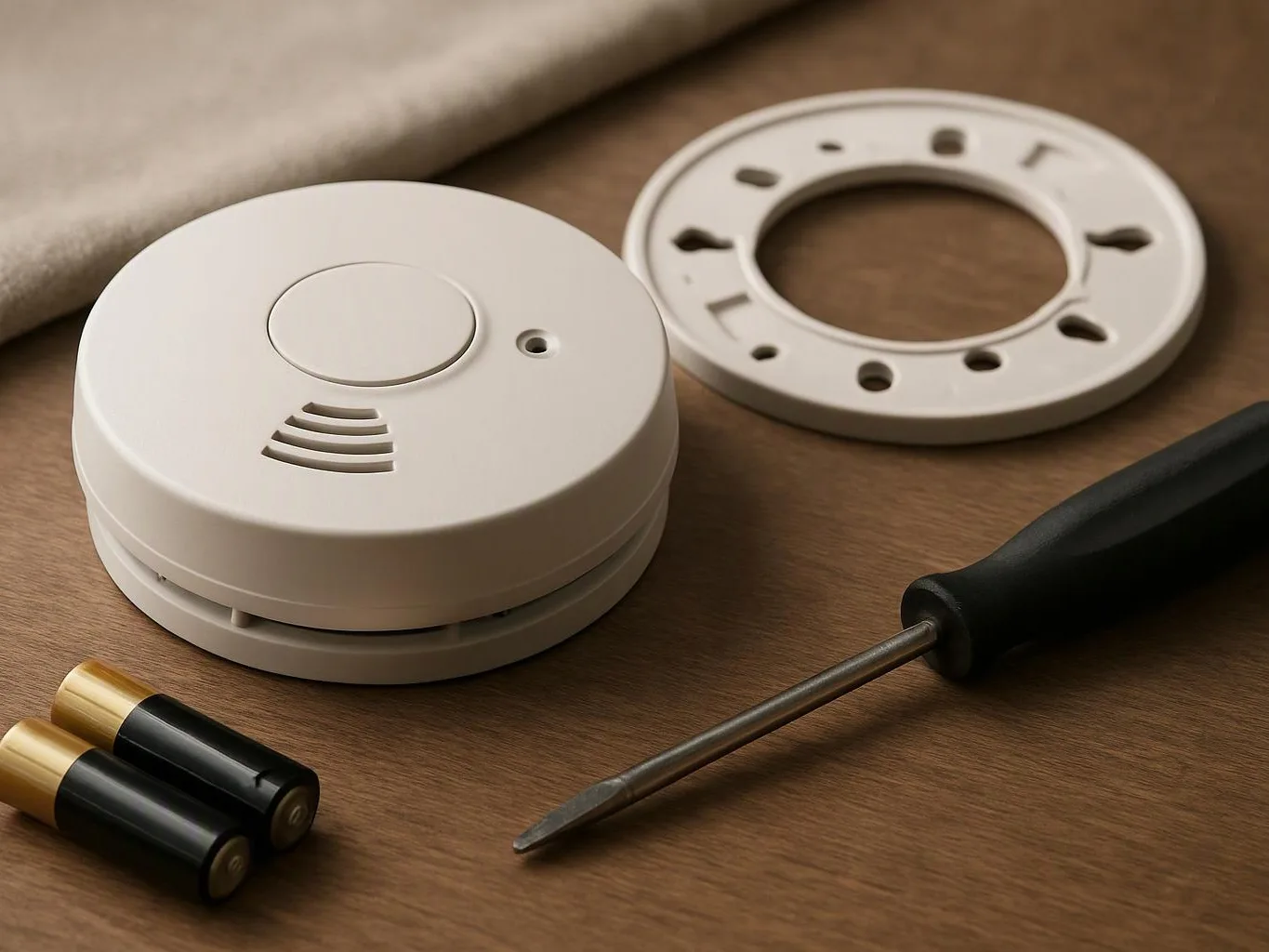
A smoke detector is a life-safety device that senses smoke and produces an audible warning. We review each alarm location, its power source, and its connection to other alarms so the system supports the home’s layout.
We also check whether the installation uses a hardwired detector, a battery-powered detector, or an approved combination alarm. Our team confirms that the test button works and explains detector maintenance after the installation.
Smoke Detector Installation Checklist
Smoke alarm planning begins with the room layout and continues through electrical testing. We use the following checklist to organize the work before installation starts.
We check the completed electrical connection before leaving the work area. You should keep the manufacturer instructions available for future testing and detector maintenance.
Where Should Carbon Monoxide Detectors Be Installed?
Carbon monoxide detectors should be placed where occupants can hear them near sleeping areas and where carbon monoxide risks require added protection.
A carbon monoxide detector monitors for carbon monoxide, an odorless gas that can come from fuel-burning equipment. We review sleeping areas and nearby rooms so an alarm can be heard when people are resting.
We also consider rooms near a fuel-burning appliance and areas connected to a garage. The final detector placement follows the product instructions and the conditions of the home.
Carbon Monoxide Detector Installation Checklist
A carbon monoxide detector installation checklist connects detector placement with the home’s fuel-burning equipment and testing plan. We review each item before completing the electrical work.
We document the locations and explain how to test the alarm after installation. You should leave the detector clear of furniture and other items that could block the alarm sound.
When Do Smoke and Carbon Monoxide Detector Services Work Together?
Smoke detector installation and carbon monoxide detector installation work together when the home needs coordinated life-safety coverage.
We coordinate the two services when one project affects both smoke protection and carbon monoxide protection. This approach helps us check the complete home protection system instead of reviewing one alarm in isolation.
How Do Smoke and Carbon Monoxide Detector Services Work Together?
Smoke and carbon monoxide detector services work together through shared installation planning, electrical connection, and alarm testing.
We explain the service scope before work begins and identify the installation decisions that affect the quote. Our team then tests the completed system and gives customer instructions for future use.
Which Electrical Safety Questions Should You Discuss Before Installation?
Electrical safety questions should address the existing circuit, wiring condition, junction boxes, interconnection method, backup power, and testing plan.
We check whether the electrical circuit can support the planned alarm connection and whether existing wiring is suitable for the work. We also inspect junction boxes for secure mounting and proper connections.
Interconnected alarms need a compatible connection method and careful testing. We confirm the backup battery arrangement and test the alarms after installation so the system operates as planned.
What Should a Home Electrical Maintenance Checklist Cover?
A home electrical maintenance checklist should review alarm operation, visible wiring, outlets, the electrical panel, and other signs that electrical work needs attention.
We inspect smoke alarms and carbon monoxide alarms for power, damage, secure mounting, and response at the test button. We also look for visible home wiring concerns that could affect safe operation.
The electrical panel and outlets can provide useful clues about the condition of the home electrical system. We include those areas in the review when the detector installation exposes a related electrical concern.
How Chris Miller Electric Plans Detector Installation and Testing
Chris Miller Electric plans detector installation with a site assessment, careful detector placement, a secure electrical connection, alarm testing, and clear customer instructions.
Our team begins by reviewing the home layout, existing alarms, electrical panel, wiring access, and locations near sleeping areas or fuel-burning appliances. We use that information to build a practical installation plan.
We then install or replace the selected alarms, complete the electrical connection, and test each device. Our crew explains the test button, battery backup, alarm sounds, and maintenance steps before the work is complete.
For detector installation planning, contact Chris Miller Electric to discuss the home’s alarm locations and electrical needs.
Questions About Smoke and Carbon Monoxide Detector Installation
Can smoke detectors and carbon monoxide detectors be interconnected?
Yes, compatible smoke detectors and carbon monoxide detectors can be interconnected when the product instructions and wiring method allow it. Chris Miller Electric checks compatibility, completes the connection, and tests the alarms together.
Should a carbon monoxide detector be hardwired?
A carbon monoxide detector should use the power method that fits the home, the device, and the manufacturer instructions. We review hardwired, plug-in, and battery-powered options with the existing electrical circuit and backup power in mind.
What should I check when an existing smoke detector needs replacement?
An existing smoke detector replacement should include the alarm type, mounting bracket, power connection, battery compartment, and interconnection method. We check the existing wiring and test the replacement after installation.
How can I tell whether detector wiring needs electrical attention?
Detector wiring needs electrical attention when alarms lose power, fail to interconnect, show damaged connections, or do not respond during testing. We inspect the circuit, junction box, wiring condition, and alarm connection before making repairs or replacements.