A Homeowner’s Guide to Electrical Safety Upgrades
Home electrical safety upgrades can lower shock, fire, and carbon monoxide risks. They improve circuit protection, grounding, outlets, and alarm systems. Homeowners should start with GFCI protection in wet areas. They should also check AFCI protection, grounded outlets, smoke detectors, and carbon monoxide detectors. Older or changed wiring needs an electrical inspection. The electrician can also install safe outlets and detectors. Upgrade needs depend on the home’s age, wiring, use, and safety risks.
Get a Free Estimate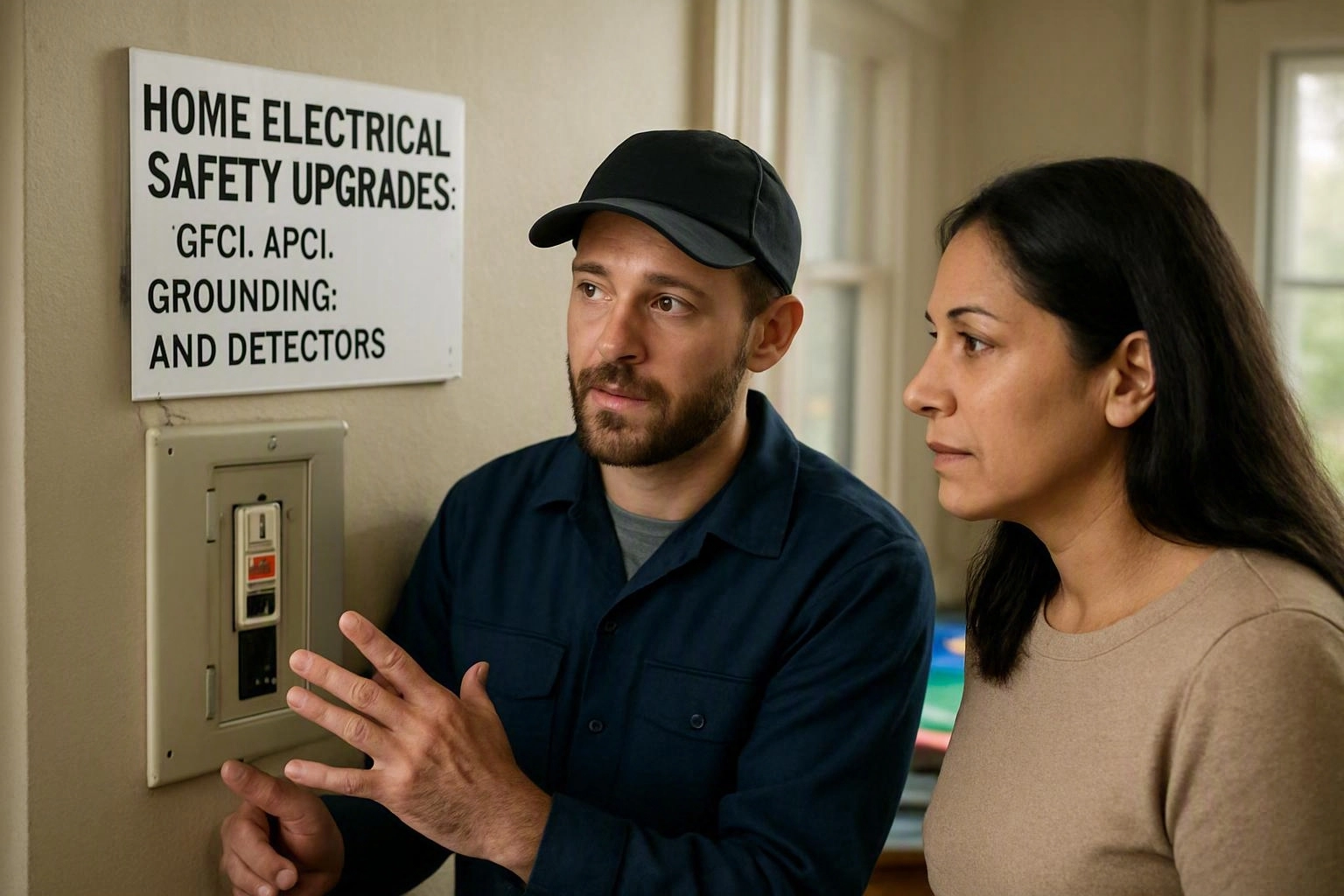
Why Homeowners Need Electrical Safety Upgrades?
Electrical inspections help find hazards before they cause harm. A problem could lead to a shock, fire, or alarm failure. Wiring and outlets may look fine while hidden faults reduce safety.
Older systems need extra care. Newer homes can also develop problems after remodeling or water damage. Appliance changes and do-it-yourself wiring can create risks. We inspect each home based on its condition.
Some checks are visual. We look for damage, heat marks, loose covers, and missing outlet plates. Wiring tests and repairs need proper tools and training. An inspection ranks hazards by urgency. It also shows which code corrections may apply.
Where Should GFCI Outlets Be Installed?
GFCI outlets should go where electricity may contact water. These areas include bathrooms, kitchens, garages, basements, laundry rooms, and outdoor outlets. A GFCI watches current flow and shuts off power during a ground fault. This helps lower the risk of serious shock.
GFCI means ground-fault circuit interrupter. The device compares power leaving and returning on a circuit. A small difference may show that power found an unsafe path. That path could include a person or wet surface. The device trips fast to limit exposure.
Look for test and reset buttons on the outlet. The test button should cut power. The reset button should restore power. A device that will not trip or reset needs attention. Button tests cannot find every problem. Professional testing can find bad wiring or a failed device.
Placement depends on the room and outlet location. Circuit design and safety rules also matter. One GFCI can protect outlets farther down the circuit. A GFCI breaker can protect the full circuit.GFCI Outlet Installation, we check the device, wires, box, cover, and operation.
Older homes may have two-slot outlets. Their wiring may lack a ground wire. A GFCI may lower shock risk in some cases. It does not create a grounding path. The outlet needs the right label. An electrician should confirm the safest approved choice. Outdoor outlets also need weather-safe parts and covers.
Most outlet replacements take about 30 minutes to two hours. Time depends on access and wiring condition. It also depends on protection needed for other outlets. Larger jobs take longer when walls need opening. Circuit changes can also add time.
For homeowners asking about GFCI Outlet Installation in Fort Wayne, the same steps apply. We find wet areas and test current protection. We inspect the wiring and follow rules for the home and project.
What Is the Difference Between GFCI and AFCI Protection?
GFCI protection helps protect people from electrical shock. AFCI protection helps prevent fires caused by electrical arcing. GFCIs are common in wet areas. AFCIs protect certain circuits and rooms from arc faults. They can use breakers or special outlets.
A ground fault happens when power leaves its planned path. Water or damaged insulation can cause this problem. Contact with a person can also cause it. A GFCI senses the change and opens the circuit.
AFCI means arc fault circuit interrupter. An arc can form from a loose wire connection. Damaged insulation or pinched wires can also cause one. Repeated arcing creates heat. That heat can start a fire. AFCI protection finds signs of unsafe arcing and shuts off the circuit.
These devices fix different problems. One does not replace the other. A kitchen circuit may need both types of protection. Water exposure may call for GFCI protection. The circuit and room may also call for AFCI protection. A combination breaker can provide both when the panel allows it.
Older homes may not have AFCI breakers. A simple breaker swap may not be safe. We check the panel, open spaces, shared neutrals, and circuit type. We also inspect the wires and remodel work. An AFCI upgrade may need new wiring or breaker changes.
The right choice depends on the hazard. It does not depend only on device age. The electrician can also explain needed electrical code corrections.
How Can You Tell if an Outlet Is Grounded?
A grounded outlet often has three slots. Its look does not prove that grounding works. A plug-in tester can find common wiring issues. An electrician can check the full grounding path before repairs.
A three-prong outlet should connect to a ground wire. An approved grounding method may also work. Some older homes have three-slot outlets on two-wire circuits. This can make an outlet look safer than it is.
An outlet tester can find common problems. These include an open ground, reversed polarity, or open neutral. It is only a basic screening tool. It cannot find every fault. A weak connection or bad ground path may go unnoticed.
We trace the circuit when needed. We inspect the panel and grounding system. We check for old two-wire cable and damaged boxes. Loose terminals and hidden junctions also need attention. Aluminum wiring may require special repairs.
Never remove a plug’s ground pin. Do not use an adapter as a lasting repair. Missing grounding may need new wiring. It may also need a protected GFCI with the right label. The safest choice depends on the circuit and rules.
Homeowners can look for damaged covers and loose plugs. Warm outlets, scorch marks, and buzzing need attention. Turn off power before checking a suspected problem. Get professional help for panel work or wiring tests.
When Should Smoke and Carbon Monoxide Detectors Be Replaced or Installed?
Smoke detectors and carbon monoxide detectors should go in required areas. Test them often and follow the maker’s service life. Replace them sooner if they fail or become damaged. Place detectors near sleeping areas. Follow the maker’s instructions for the best location.
A smoke detector gives early warning of fire. Install alarms inside sleeping rooms and outside sleeping areas. Each required level also needs an alarm. Living rooms and halls may need alarms too. Follow safety rules and product instructions.
A carbon monoxide detector senses an odorless gas. Fuel-burning furnaces, fireplaces, and stoves can produce this gas. Generators and vehicles can also produce it. Place alarms near sleeping areas and on living levels. Keep them away from steam and cooking fumes.
Press the test button on a regular schedule. Check batteries and keep vents clear. Replace batteries as the maker directs. A test shows that the alarm can sound. It does not prove that every sensor works. Never ignore repeated warnings. Move to fresh air when a carbon monoxide alarm sounds. Then contact emergency services.
Interconnected alarms give a stronger warning. One alarm can make other alarms sound. Hardwired units may need matching wires and connectors. Wireless units help when wall access is hard. All units must work together.
We check detector age, power, placement, and condition. We also check links between alarms. During smoke and carbon monoxide detector installation, we review access and sound levels. Rental homes and remodeled homes may need extra care. Homes with children or older adults may need the same review.
What Electrical Safety Upgrades Should Homeowners Prioritize?
Homeowners should first address shock, fire, and carbon monoxide risks. Test GFCI protection and check AFCI needs. Verify grounding and repair unsafe wiring. Replace bad outlets and alarms. An electrical inspection can rank each project by risk and urgency.
Start with hazards that can hurt someone now. These include exposed wires, burning smells, and hot outlets. Water near damaged equipment is also dangerous. Repeated breaker trips need attention, so do alarms that fail. Stop using unsafe equipment and arrange testing.
| Priority | Upgrade or check | Hazard addressed | What we evaluate |
|---|---|---|---|
| Immediate | Electrical inspection and wiring repair | Shock, overheating, and fire | Damage, loose connections, overloaded circuits, and hidden junctions |
| High | GFCI installation | Ground faults in wet or damp areas | Device location, wiring, testing, and weather protection |
| High | AFCI upgrade | Hazardous electrical arcing | Panel space, breaker fit, shared neutrals, and circuit layout |
| High | Grounding repair | Fault-current and shock risks | Ground wires, outlets, panel connections, and continuity |
| High | Smoke and carbon monoxide detector installation | Fire and carbon monoxide exposure | Placement, power, age, testing, and alarm links |
| Planned | Electrical code corrections | Known unsafe or incomplete work | Rules, permits, device ratings, and access |
Panel space matters when you plan several upgrades. A new AFCI breaker may not fit every panel. Shared neutrals and circuit types can affect the work. Aluminum wires and old connections may also change the plan.
We explain what needs action now. We also explain what can wait. Some items may need more testing. Our residential electrical services focus on real safety. New faceplates should never hide wiring problems.
Features That Matter and Common Challenges During an Upgrade
Good safety upgrades match the device to the space. They must also fit the circuit and home. We check parts before installation. Then we test the finished work.
Our team explains each choice in plain language. We test carefully and share clear limits. Some walls, panels, or old wires need more study.
Features that matter
- Tamper-resistant receptacles: These help keep children from touching outlet openings.
- Weather-resistant outlets: These suit outdoor or damp areas with proper covers.
- Interconnected detectors: These alarms can sound in more than one room.
- Clear labels help people find protected outlets, breakers, and shutoffs.
Common challenges
- Multi-wire branch circuits: Shared wires need the right breaker and careful neutral work.
- Aluminum wiring: These connections need proper testing and approved repairs.
- Shared neutrals: Circuit design can affect AFCI breaker fit and setup.
- Hidden junctions and finished walls can make old wiring hard to inspect.
Chris Miller Electric can discuss GFCI Outlet Installation and detector work. We can also review grounding and code correction needs. Our advice follows the test results. We do not assume a new device fixes old wiring.
Questions About Electrician
Do All Outlets Need to Be GFCI Protected?
No. GFCI protection usually covers wet, damp, outdoor, garage, and laundry areas. It also covers many kitchens and basements. Rules depend on the room, outlet, circuit, and local code. An inspection can find missing protection.
Can a GFCI Protect an Ungrounded Outlet?
In some cases, a GFCI can lower shock risk on an ungrounded outlet. It does not create a ground wire. The outlet needs correct testing and labels.
Are AFCI Breakers Required in Older Homes?
Not every older home needs AFCI breakers right away. Remodels, additions, and circuit changes may require them. Local rules may also apply. We check the panel, circuit, shared neutrals, and wiring condition.
How Often Should Smoke and Carbon Monoxide Detectors Be Tested?
Test both alarm types often. Follow the maker’s instructions and home safety guidance. Check batteries and warning sounds. Keep sensors clear. Replace units when their listed service life ends. Replace damaged alarms sooner.
How Much Does It Cost to Upgrade Electrical Outlets in a House?
There is no single cost for this work. The job may need a simple outlet change or new wiring. Grounding repairs, panel work, wall access, and several outlets can add cost. An inspection gives you a clearer work plan.
Prioritize electrical safety upgrades by risk. Fix active damage and failed alarms first. Then improve wet-area protection, arc-fault protection, grounding, and alarm coverage. Our team can inspect the home and help plan the work.
Related Resources
How Much Does an Electrician Cost in Fort Wayne?
electrician cost Fort Wayne IN
What It CostsWhole-Home Rewiring: Cost, Timeline, and What to Expect
whole house rewiring cost Fort Wayne IN
What It CostsHot Tub and Pool Electrical Wiring: Cost, Scope, and Scheduling
hot tub and pool electrical wiring cost Fort Wayne
How It WorksWhat to Expect During an Electrical Troubleshooting Visit
electrical troubleshooting electrician Fort Wayne