How to Tell If Your Older Home Needs Electrical Rewiring
Older homes may need electrical rewiring for many reasons. Warning signs include tripped breakers, flickering lights, warm outlets, burning smells, sparks, shocks, and brittle insulation. Old fuse boxes can also signal a problem. Rewiring may also follow a remodel, water damage, or an unsafe inspection report. Don't remove wires or open live equipment. Then, they can suggest repairs, code updates, partial rewiring, or whole-home rewiring.
Get a Free EstimateWhat Are the Signs Your House Needs Rewiring?
Electrical rewiring may need review when a home shows repeated warning signs. These signs include tripped breakers, dim lights, warm outlets, burning smells, sparks, shocks, and buzzing. One sign may have a simple cause. Several signs mean.electrician should inspect the system.
These are common signs your home needs electrical rewiring. Some affect one connection. Others point to wider problems with the wiring or panel.
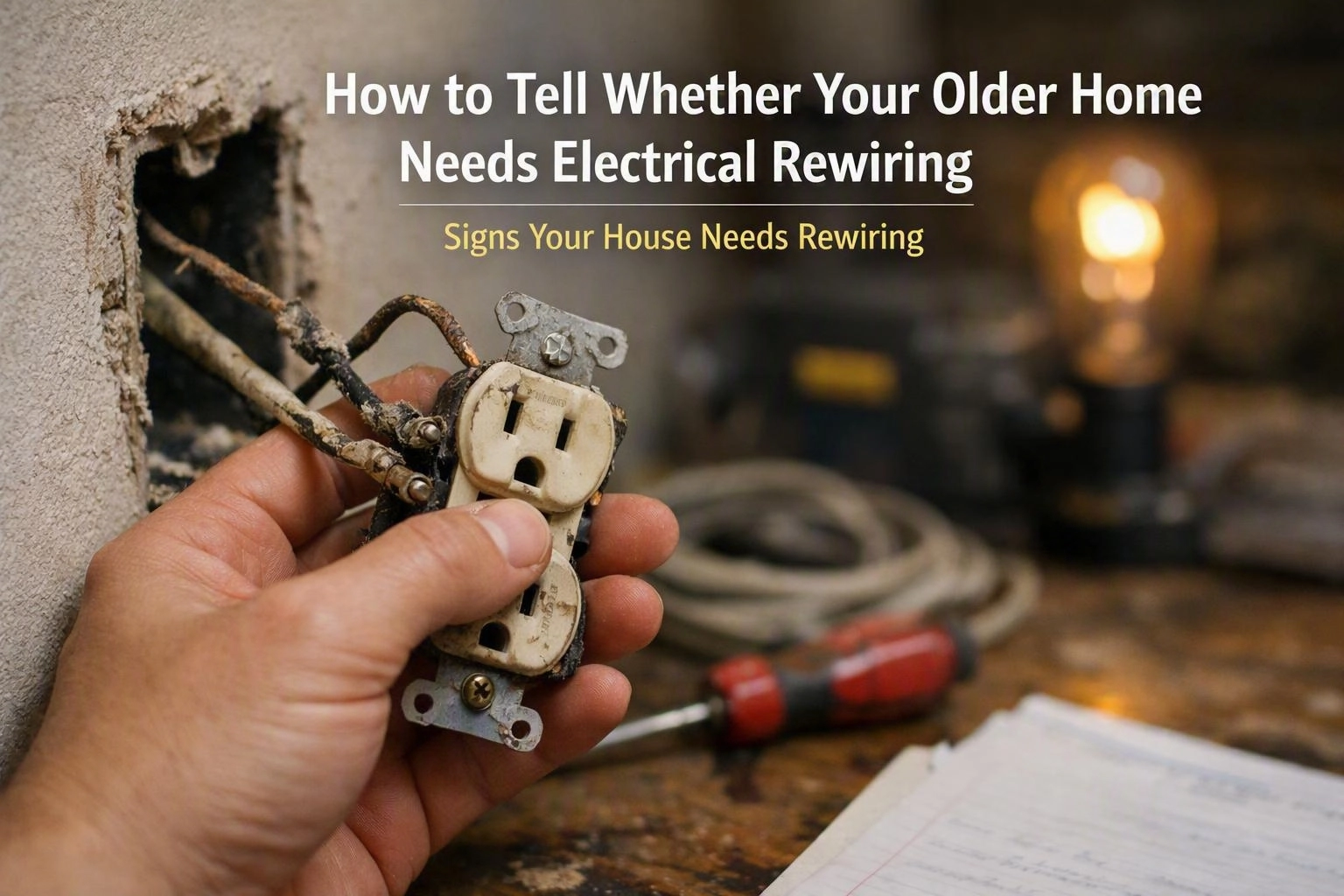
Older house electrical wiring problems often show through several signs. Dim lights, a warm outlet, and repeated trips may mean the circuit carries too much demand.
These issues may appear after a remodel, room addition, or electric vehicle charger install. They can also follow a new home office. An electrician can tell if one circuit or the whole home needs work.
How Do I Know if My House Needs Rewiring?
A home needs rewiring when an inspection finds damaged wires, poor grounding, overloaded circuits, or unsafe connections. The system may also lack enough power for today's needs. Age alone doesn't decide the answer. An electrician should check the panel, circuits, outlets, insulation, and past repairs first.
The best answer to “does my house need rewiring?” comes from a full system check. A visual check can find some signs. It can't show every connection inside walls, ceilings, or boxes.
During a home electrical inspection, our team checks the home's age and build. We review the panel, service entrance, circuits, grounding, outlets, switches, and visible cables. We also ask about past repairs. Problems may happen when several appliances run together.
Aluminum wiring and knob-and-tube wiring need careful review. They don't always mean the whole home needs new wires. Aluminum branch wiring may need approved connections. Knob-and-tube wiring may have changes or added insulation around it. Its condition and past changes all matter.
Capacity is another key concern. Older systems served homes with fewer large appliances. New ranges, heat pumps, workshops, offices, additions, and electric vehicle chargers can overload old circuits.
Chris Miller Electric can arrange Electrical Inspections and explain the results clearly. In Fort Wayne, IN, homeowners can ask about Whole-Home Rewiring in Fort Wayne. The same inspection steps work in homes anywhere.
Why Older House Electrical Wiring Causes Problems?
Older house electrical wiring can cause trouble when its parts no longer fit modern home use. Old materials, weak connections, and poor circuit plans can all create risks. Knob-and-tube wiring, aluminum wiring, and cloth-covered cable each need a different review.
Knob-and-tube wiring uses separate wires held by knobs and tubes. Some older homes still have parts of this system. Newer cable may connect to it. Past changes can leave weak connections or damaged supports.
Aluminum branch wiring expands and shrinks as it heats and cools. Poor connections can become hot. Not every home with aluminum wiring needs full rewiring. A qualified professional should still check it.
Cloth-covered cable can dry out, crack, or become brittle. Rodents, heat, water, and remodeling can damage the cover. Weak insulation raises the risk of contact, arcing, and faults.
Electrical code rules change as safety needs change. Old work may have been allowed when installed. Later work can create unsafe combinations. Modern appliances also place more demand on older circuits.
Our full range of Electrician work includes careful troubleshooting and safety repairs. We also handle electrical code corrections and larger upgrade plans. We don't replace safe wiring without a reason. We find hazards and suggest a clear path forward.
What Should You Do When You Notice an Electrical Warning Sign?
An electrical warning sign needs quick action and a professional check. Stop using hot, sparking, buzzing, or damaged outlets. Keep flammable items away. Turn off the circuit only if it's safe. Leave the area if you see smoke or active arcing. Call emergency services when needed.
Don't touch exposed wires or wet electrical equipment. Don't open a smoking or damaged panel. Leave the home if you see smoke, fire, or ongoing arcing. A wall can stay hot after a spark stops.
If there is no smoke, water, or fire, you may turn off the circuit. Use the panel only if you can do so safely. Don't remove the panel cover. Call an emergency electrician if you can't find the right circuit.
Move furniture, paper, curtains, and solvents away from a hot outlet. Stop using devices on that circuit. Don't bypass the issue with an extension cord.
Write down what happened and which devices were running. Note if one room or several rooms were affected. Photos may help. Don't move a cover or expose wires for a photo.
You may reset a tripped breaker once if there is no heat, smell, water, smoke, or damage. If it trips again, leave it off. Repeated resets can increase heat at a bad connection.
DIY Electrical Checks vs. Professional Rewiring Inspection
DIY checks can find visible warning signs. Only a professional inspection can check hidden wires, grounding, and circuit loads safely. Homeowners can record symptoms and reset one breaker if safe. They shouldn't open panels, remove outlets, test bare wires, or rewire a home.
You can watch, record, and report symptoms without taking equipment apart. They can trace faults and check hidden wiring.
| Factor | DIY | Professional |
|---|---|---|
| Visible warning signs | Look for heat, odor, dark marks, loose covers, and damaged cords. Don't touch unsafe parts. | Checks likely causes and related circuits. |
| Voltage testing | Don't test bare wires or open live equipment. | Uses safe tests to find faults and unsafe voltage. |
| Electrical panel | Read labels and note tripped breakers. Don't remove the cover. | Checks breakers, connections, labels, capacity, and condition safely. |
| Hidden wiring | You can't safely check wires inside walls, ceilings, or boxes. | Traces circuits and checks wires, splices, grounding, and insulation. |
| Electrical code corrections | Don't change wiring or safety devices. | Suggests repairs for safety and code concerns. |
| Whole-home rewiring | This isn't a safe DIY project. It involves many circuits and connections. | Plans access, circuits, grounding, tests, and final checks. |
Most inspection visits take about one to three hours. Home size, panel access, and symptoms affect the time. A large rewiring job may take several days or longer. These are planning ranges, not promises.
Recording a symptom helps. Opening live equipment doesn't. A professional check matters before a remodel, service upgrade, or appliance install. It also helps before buying an older home.
What Happens During a Rewiring Assessment?
A rewiring assessment checks the service, panel, circuits, outlets, switches, grounding, connections, and visible cables. The electrician records hazards and finds overloaded or old wiring. They also check if the system can support current loads. Then, they explain whether repairs or rewiring make the most sense.
An inspection helps separate one visible issue from wider system problems. Each home differs. A careful review often follows these steps:
Access affects the work plan. Wires behind finished walls may need small openings. Attic or crawl-space access may also help. An experienced crew explains where access may be needed.
The final plan should link each hazard to an action. It should separate urgent repairs from planned upgrades. That helps homeowners understand their safety needs and future work.
Does My House Need Partial Rewiring or Whole-Home Rewiring?
Partial rewiring can fix one damaged, overloaded, or remodeled circuit. Whole-home rewiring may fit homes with unsafe wiring in many areas. It may also fit homes with poor grounding or limited power. The choice depends on the wiring, panel, access, remodel plans, and inspection results.
Partial rewiring may work when one room or circuit has a clear issue. The rest of the system must be in good shape. Examples include a damaged branch circuit or a kitchen circuit update. Bathroom remodels and water damage may also need partial work.
Whole-home rewiring replaces wiring across a larger part of the home. It may be needed when old or damaged wires appear throughout the house. It may also help when many circuits have unsafe changes.
Age alone doesn't prove that full replacement is needed. A newer section may be safe while an older section needs work. An old system may also have careful updates. The inspection must focus on the actual wires and connections.
Remodel plans can affect the best choice. Open walls may make new wiring easier and less costly. Water damage can expand the work. Nearby cables, boxes, and connections may also need review.
Safety and power needs should guide the decision. An office, charger, heat pump, workshop, addition, or large kitchen may need new circuits. Full rewiring may not be needed. Our team can explain the options and help plan the work.
Questions About Electrician
How Often Does a House Need to Be Rewired?
There is no set rewiring schedule for every house. A home should be checked when it shows old wiring, repeated faults, damaged insulation, or new power needs. An inspection gives a better answer than age alone. Building methods, repairs, water, load, and care all affect risk.
How Much Does It Cost to Rewire a House?
The cost depends on home size, access, wiring, panel capacity, circuits, walls, grounding, and project size. A professional assessment is needed for a useful estimate. Ask for a written scope. It should list urgent repairs, code work, access work, and optional upgrades.
Can You Sell a House That Needs Rewiring?
A home that needs rewiring may be sold. Electrical defects can affect disclosures, inspections, loans, insurance, and price talks. Owners shouldn't hide known hazards. A written inspection and repair plan can show the problem's size.
Is It Safe to Live in a House That Needs Rewiring?
Safety depends on the exact hazard and its condition. A small issue may wait for a planned repair. Smoke, arcing, burning smells, exposed wires, repeated trips, hot outlets, and shocks need quick action. Stop using the area. Turn off power only if safe. Call a professional or emergency services when needed.
What Happens if a House Is Not Rewired?
Unsafe wiring can get worse when left alone. Damaged insulation, loose connections, overloaded circuits, and poor grounding can cause problems. Results may include equipment damage, shocks, heat, arcing, and fire risk. Not every old home needs full rewiring. Known hazards should still be checked and fixed.
Visible signs mean you should investigate. Don't panic or remove wiring. We can review the system, explain the risks, and help you choose repairs or rewiring.
For an inspection or guidance about older-home wiring, contact our team.
Related Resources
How Much Does an Electrician Cost in Fort Wayne?
electrician cost Fort Wayne IN
What It CostsWhole-Home Rewiring: Cost, Timeline, and What to Expect
whole house rewiring cost Fort Wayne IN
How It WorksWhat to Expect During an Electrical Troubleshooting Visit
electrical troubleshooting electrician Fort Wayne
How It WorksElectrical Inspections and Code Corrections: Costs, Process, and Next Steps
electrical inspection and code correction Fort Wayne