
What is Short Circuit?
Short Circuit is an unintended low-resistance path that lets excessive electric current flow between points at different voltage. The path may form through damaged insulation, loose wiring, a failed component, or contact with ground. The sudden current rise can trip a circuit breaker, damage equipment, create heat, and start an electrical fire.
Quick Facts About Short Circuit
Category
Electrical fault
Measured by
Current, resistance, and fault current
Used for
Describing unintended current paths
Common confusion
Short circuit versus overload
Main risk
Fire, shock, and equipment damage
Also called
Electrical short, Short circuit fault
Key Takeaways About Short Circuit
- A short circuit creates an unintended path with much lower resistance than the normal load.
- Circuit breakers and fuses interrupt excessive current before wiring overheats.
- Damaged insulation, loose connections, water, and failed equipment can create short circuits.
- A tripped breaker may signal a short circuit, an overload, or another wiring fault.
- Repeated trips require diagnosis instead of repeated breaker resets.
Understanding Short Circuit
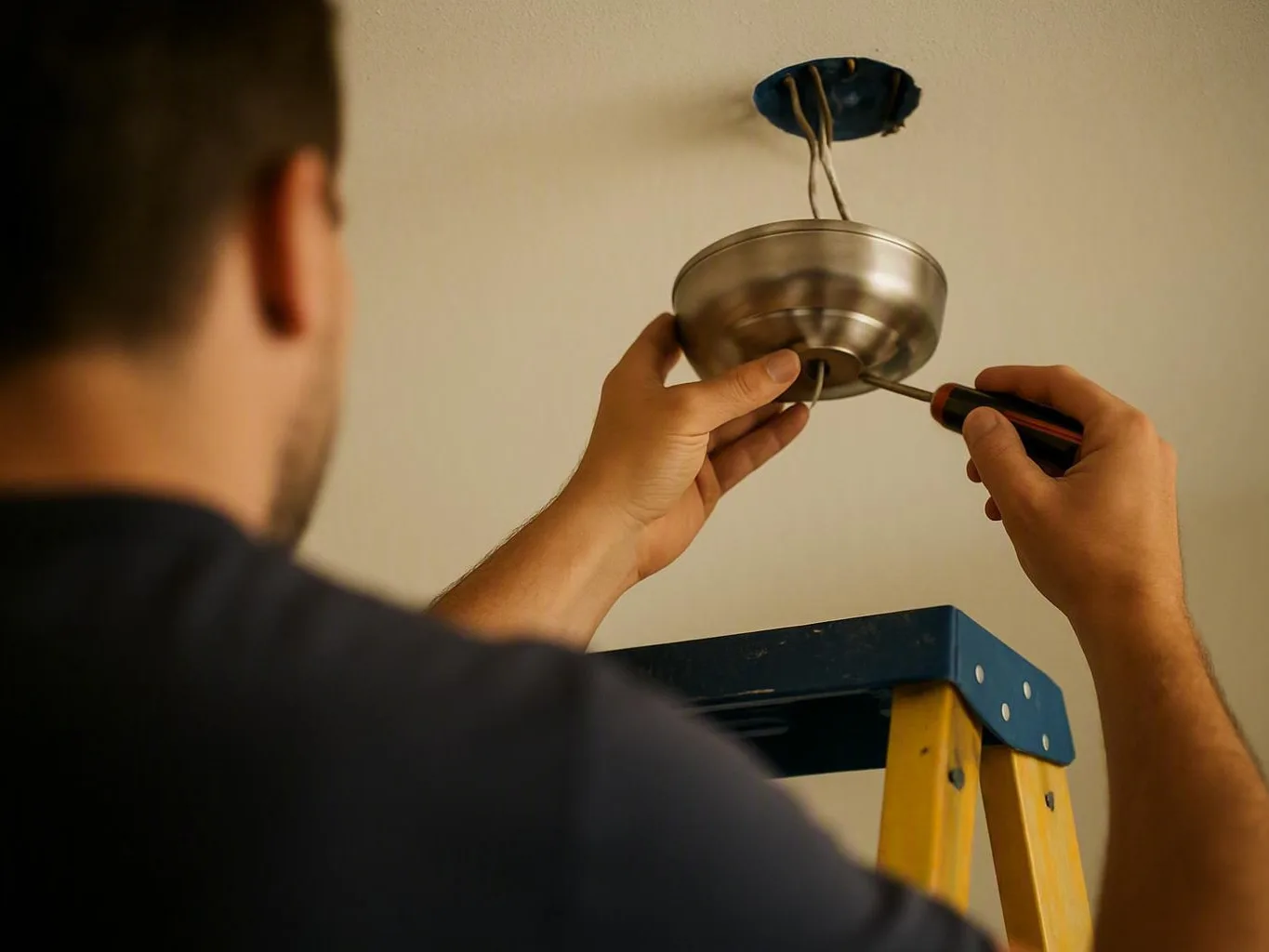
Short Circuit describes an unintended electrical connection with very little resistance. The connection lets current bypass the normal load, such as a light, motor, or appliance. Current rises as resistance falls. The fault can produce intense heat, sparks, or an arc. This can happen within a fraction of a second.
Related glossary terms: Circuit, Current, Voltage.
A short may occur between two energized conductors. It may occur between an energized conductor and neutral. It may also occur between an energized conductor and grounded metal. Common causes include damaged wire insulation, loose terminals, crushed cable, moisture, and failed electrical components. A properly operating circuit breaker or fuse should open the circuit. It should open when current exceeds its safe rating.
How Short Circuit Works, Is Measured, or Is Used?
Ohm's Law explains the basic relationship. Current equals voltage divided by resistance, written as I = V ÷ R. A 120-volt circuit can develop a path with very low resistance. The current can then rise sharply. Fault current also depends on the utility supply, transformer, conductor length, conductor size, and connection quality.
Electricians locate a suspected fault by reviewing the circuit history. They switch off power and inspect accessible wiring and equipment. They may use.multimeter for voltage and continuity checks. They may use an insulation tester for insulation resistance. They may use a clamp meter for current. Testing must match the circuit and equipment. An ordinary meter can be damaged by an energized fault.
A breaker trip doesn't identify the exact cause. A short circuit, an overload, a ground fault, or a defective breaker can cause similar symptoms. Safe testing separates the load from the branch circuit. It checks for damaged conductors and verifies correct connections. Power can then return.
Why Short Circuit Matters?

Short circuits matter because fault current can heat conductors beyond their rated capacity. Heat may damage insulation, terminals, receptacles, and connected equipment. In severe cases, an arc can ignite nearby material. It can also expose people to shock and arc-flash energy.
Protective devices reduce this risk only when ratings match the conductor and installation. A larger breaker isn't a safe fix for repeated tripping. The wiring may not withstand the added current. The National Electrical Code addresses overcurrent protection, conductor sizing, grounding, and equipment installation through NFPA 70.
When Short Circuit Matters Most?
Pay close attention after a breaker trips right when a device turns on. Also watch after a receptacle becomes warm or discolored. Watch after water reaches electrical equipment. Burning odors, buzzing, visible sparks, damaged cords, and recurring outages also point to a fault. The fault needs prompt attention. Turn off power when you can do so safely. Don't keep resetting the breaker.
Fault diagnosis becomes especially important during remodeling, panel changes, and appliance installation. It also matters during older-home repairs. New equipment can reveal weak connections or damaged cable. A smaller load may never have exposed these problems. In Fort Wayne homes and commercial buildings, seasonal moisture can change circuit conditions. Frozen pipes, outdoor equipment, and aging wiring can also change these conditions.
How to Evaluate Short Circuit?
- Does the breaker trip immediately, only after a load runs, or at random times.
- Are receptacles, switches, cords, or panel connections warm, scorched, loose, or discolored.
- Does the circuit show the correct voltage with no unexpected voltage to grounding paths.
- Can insulation resistance and continuity tests identify an unintended connection with power off.
- Do breaker size, conductor size, grounding, and connection methods match the installation requirements.
Related Concepts Compared
Short Circuit vs. Overload
An overload occurs when a circuit carries more current than its normal rating because connected loads exceed its capacity. A short circuit creates an abnormal low-resistance path and often causes a much faster current surge.
Short Circuit vs. Ground-Fault Circuit Interrupter
A ground-fault circuit interrupter detects an imbalance between outgoing and returning current and disconnects power quickly. It is a protective device, not another name for the fault itself.
Short Circuit vs. Arc-Fault Circuit Interrupter
An arc-fault circuit interrupter monitors for dangerous arcing patterns and disconnects power. A short circuit may create an arc, but not every short circuit is an arc fault.
Short Circuit vs. Continuity Test
A continuity test checks whether an electrical path exists, usually with power off. The test can help locate a short, but continuity alone does not prove that a circuit is safe or correctly wired.
Expert Note
A breaker trip is useful evidence, not a diagnosis. The fault may be inside a plugged-in appliance, a receptacle box, a cable, or the breaker itself. Testing must identify the fault location before anyone changes protection or reconnects equipment.
Common Mistakes or Myths About Short Circuit
- Replacing a tripping breaker with a larger breaker without checking conductor size.
- Assuming every breaker trip means the breaker has failed.
- Resetting a breaker repeatedly while a fault remains energized.
- Testing resistance or continuity on an energized circuit.
- Ignoring warm outlets, burning smells, discoloration, or buzzing sounds.
Short Circuit in Practice: A Real-World Example
A homeowner plugs in a vacuum cleaner, and the bedroom breaker trips immediately. The vacuum cord may have damaged insulation, or the receptacle wiring may have a loose conductor touching the box. Unplugging the vacuum and testing the circuit helps separate an appliance fault from a wiring fault.
Related Services
Related Terms
Circuit
Circuit is a complete path that allows electric current to move from a power source through…
Current
Current is the movement of electric charge through a conductor, device, or circuit. It's measured in…
Voltage
Voltage is the electrical pressure that pushes electric charge through a circuit. Measured in volts, voltage…
Ohm's Law
Ohm's Law is the relationship between voltage, current, and resistance in an electrical circuit. The law…
Chris Miller Electric
Have Questions About Short Circuit?
Contact Chris Miller Electric for practical guidance on Short Circuit and related electrician work in Fort Wayne.