
What is a Current?
Current is the movement of electric charge through a conductor, device, or circuit. It's measured in amperes, also called amps, and flows when voltage creates an electrical path. Current determines how much electrical load wires and equipment carry. Excessive current can overheat conductors, trip breakers, damage equipment, or create a fire hazard.
Quick Facts About Current
Category
Electrical quantity
Measured by
Amperes or amps
Formula
I = V ÷ R
Common confusion
Current is not the same as voltage
Also called
Amperage, Electric current
Often discussed with
Electrical Troubleshooting
Key Takeaways About Current
- Amperes measure how much electric charge moves through a circuit each second.
- Voltage gives electrical pressure, while current shows flow through a complete path.
- Wire size, breaker rating, and equipment design must match the expected current.
- An overload raises current above a circuit’s safe operating limit.
- A clamp meter measures current without disconnecting the conductor.
Understanding Current

Current is the rate at which electric charge moves through a circuit. Electric charge flows through a conductive path when voltage differs between two points. The path may include a wire, switch, receptacle, motor, light, or other electrical device.
Related glossary terms: Voltage, Ohm's Law, Ohm.
Amperes, shown as A, measure current. One ampere represents one coulomb of charge flowing each second. In a home, a small electronic device may draw less than one amp. A large heating appliance may draw many amps. The amount depends on equipment design, supply voltage, and electrical resistance.
How Current Works, Is Measured, or Is Used?
Ohm’s Law describes the relationship between current, voltage, and resistance. The formula is I = V ÷ R. I represents current in amperes. V represents voltage in volts. R represents resistance in ohms. If voltage rises while resistance stays the same, current rises. If resistance increases while voltage stays the same, current falls.
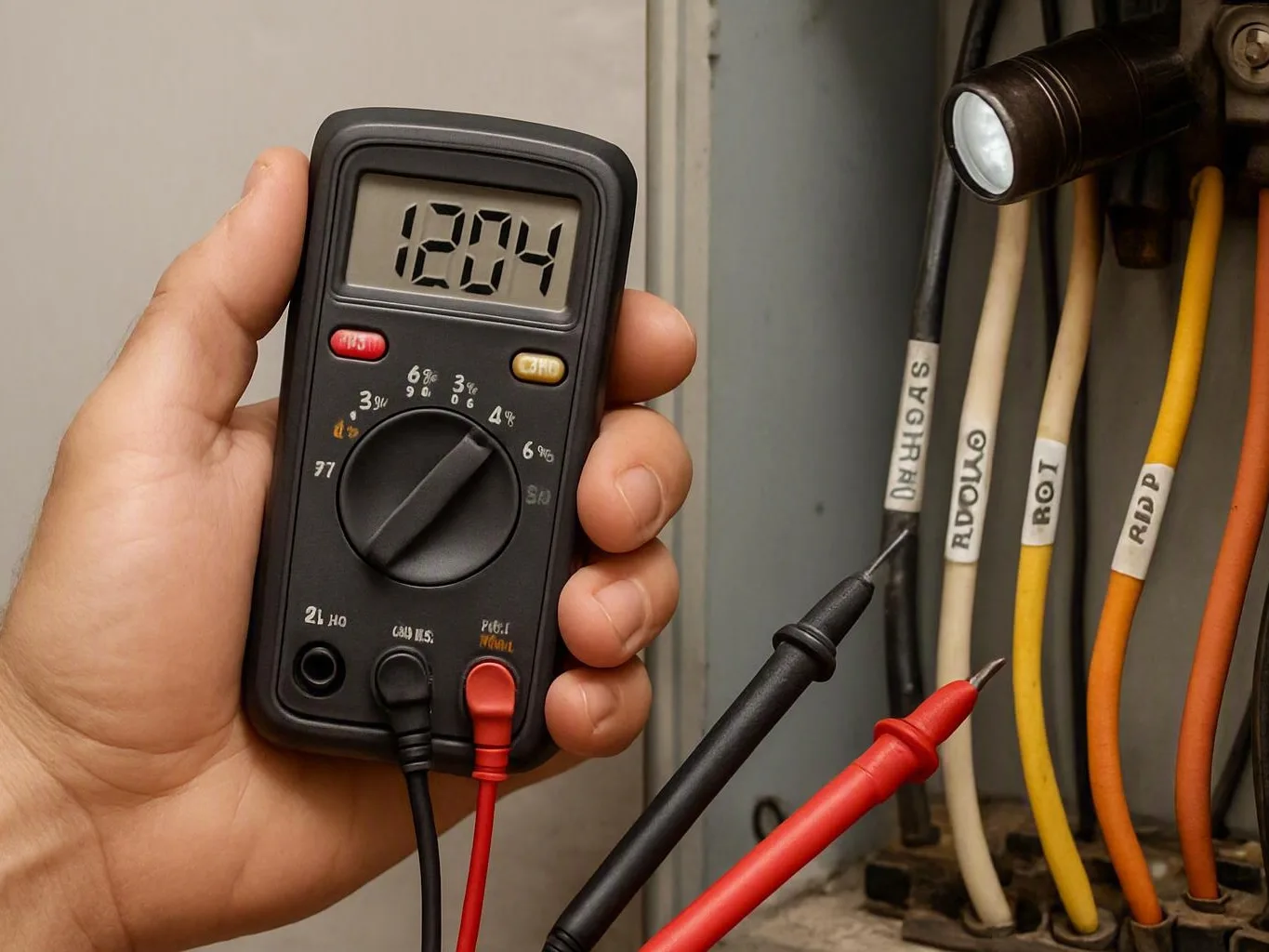
An electrician may measure current flow with a clamp meter or an ammeter. A clamp meter senses the magnetic field around a conductor. It usually doesn't require opening the circuit. The measured value can be compared with the equipment nameplate, breaker rating, wire size, and expected operating load. A reading that changes sharply may point to a starting surge, loose connection, failing component, or other fault.
Why Current Matters?
Wire capacity depends on conductor material, size, insulation, installation conditions, and safe temperature limits. Too much current produces heat in the conductor. That heat can damage insulation or nearby components. A circuit breaker interrupts power when current reaches an unsafe level for long enough. Breaker operation depends on the device rating and fault conditions.
Electrical load also affects performance and planning. A circuit with too much demand may cause nuisance trips, dimming lights, warm receptacles, or voltage drop. Proper load calculations help determine whether an existing circuit can serve new equipment. They can also show whether a separate circuit's needed.
When Current Matters Most?
Overload conditions deserve prompt attention when a breaker trips repeatedly, a receptacle feels hot, or lights dim. Lights may dim when equipment starts. Don't replace a breaker with a larger rating simply to stop trips. The conductors, connections, and equipment may not support the higher current. This can increase fire risk.
Current measurements matter during troubleshooting, renovations, and new installations. They help verify motor operation, identify unbalanced loads, check appliance demand, and confirm protective devices match the circuit. In Fort Wayne homes and commercial buildings, seasonal heating equipment, air conditioners, electric water heaters, and vehicle chargers can make accurate load information especially useful.
How to Evaluate Current?
- Compare measured amperes with the equipment nameplate and the circuit breaker rating.
- Check whether the conductor size and insulation rating suit the circuit’s expected current.
- Look for repeated breaker trips, warm devices, flickering lights, or unusual buzzing.
- Use a clamp meter only when the meter and procedure match the circuit voltage and application.
- Confirm that added equipment fits the service and branch-circuit load calculation.
Related Concepts Compared
Current vs. Voltage
Voltage is the electrical pressure that drives charge through a circuit. Current is the amount of charge that flows as a result.
Current vs. Resistance
Resistance opposes current flow. Current depends on the voltage applied and the resistance in the circuit.
Current vs. Power
Power describes the rate of electrical energy use and is measured in watts. In a simple circuit, power equals voltage multiplied by current.
Current vs. Load
A load is equipment that consumes electrical energy. Current is the flow that the load draws from the circuit.
Expert Note
A current reading is meaningful only when the operating condition is known. Motors and compressors can draw a brief starting current that is much higher than their running current, so one measurement may not reveal a fault or confirm safe operation.
Common Mistakes or Myths About Current
- Assuming a higher amp rating always means a more powerful or safer circuit.
- Confusing current with voltage when describing an electrical problem.
- Replacing a tripping breaker with a larger breaker without checking conductor size.
- Measuring only normal running current on equipment that has a high starting surge.
Current in Practice: A Real-World Example
A 1,200-watt appliance on a 120-volt circuit draws about 10 amps during normal use. Several such appliances on a 15-amp branch circuit may exceed its rating and trip the breaker.
Sources & Further Reading on Current
Related Services
Related Terms
Voltage
Voltage is the electrical pressure that pushes electric charge through a circuit. Measured in volts, voltage…
Ohm's Law
Ohm's Law is the relationship between voltage, current, and resistance in an electrical circuit. The law…
Ohm
Ohm is the SI unit of electrical resistance. It measures how strongly a material or device…
Watt
Watt is the SI unit of power, which measures how quickly electrical energy is used or…
Chris Miller Electric
Have Questions About Current?
Contact Chris Miller Electric for practical guidance on Current and related electrician work in Fort Wayne.