
What is Copper Wire?
Copper Wire is an electrical conductor made from copper, a metal with low electrical resistance and strong heat tolerance. Copper wire carries current through branch circuits, service equipment, appliances, controls, and communication systems. Insulation, wire gauge, temperature rating, and installation method determine where a specific copper wire may be used safely.
Quick Facts About Copper Wire
Category
Electrical conductor
Used for
Power, grounding, controls, and communications
Measured by
American Wire Gauge, ampacity, and insulation rating
Common confusion
Copper-clad aluminum is not solid copper
Also called
Copper conductor, Cu wire
Often discussed with
Electrical Troubleshooting, Whole-Home Rewiring
Key Takeaways About Copper Wire
- Copper carries current well because it has low electrical resistance.
- Wire gauge sets how much current a copper conductor can safely carry.
- Insulation keeps people and equipment safe from contact, heat, and faults.
- Bare copper often grounds circuits, while insulated copper carries energized current.
- Copper wire must match the circuit voltage, load, heat, and wiring method.
Understanding Copper Wire

Copper wireis a metal conductor formed into a solid or stranded shape. Copper atoms allow electrical charge to move with relatively little resistance. This makes copper practical.branch circuits, service conductors, control wiring, and equipment connections. A solid conductor contains one copper piece. A stranded conductor contains many small copper strands. These strands bend more easily.
Related glossary terms: Wire Gauge, Current, Voltage.
Most building wire has a copper conductor covered by insulation. The insulation separates energized metal from people, other conductors, and grounded surfaces. Common insulation materials include thermoplastic compounds marked by letters such as THHN, THWN, or XHHW. The marking describes heat tolerance and moisture resistance. It also shows the approved installation setting.
How Copper Wire Works, Is Measured, or Is Used?
Electrical current creates heat as it moves through resistance. Larger copper conductors generally have lower resistance. They can carry more current than smaller conductors of the same type. Installers select a wire size by reviewing the circuit load, voltage, conductor length, terminal temperature rating, and heat removal conditions.
American Wire Gauge, or AWG, identifies conductor size. A smaller AWG number means a larger conductor, so, 12 AWG copper is larger than 14 AWG copper. The final selection also depends on ampacity. This means the allowable current under stated conditions. It also depends on the requirements of the National Electrical Code.
In a typical circuit, an insulated copper conductor carries current from a source to a load. Another conductor provides the return path. A separate equipment grounding conductor helps carry fault current back to the source. This lets a protective device open the circuit. Connections must be tight and compatible with the conductor material. They must stay protected inside approved boxes, raceways, or cable assemblies.
Why Copper Wire Matters?
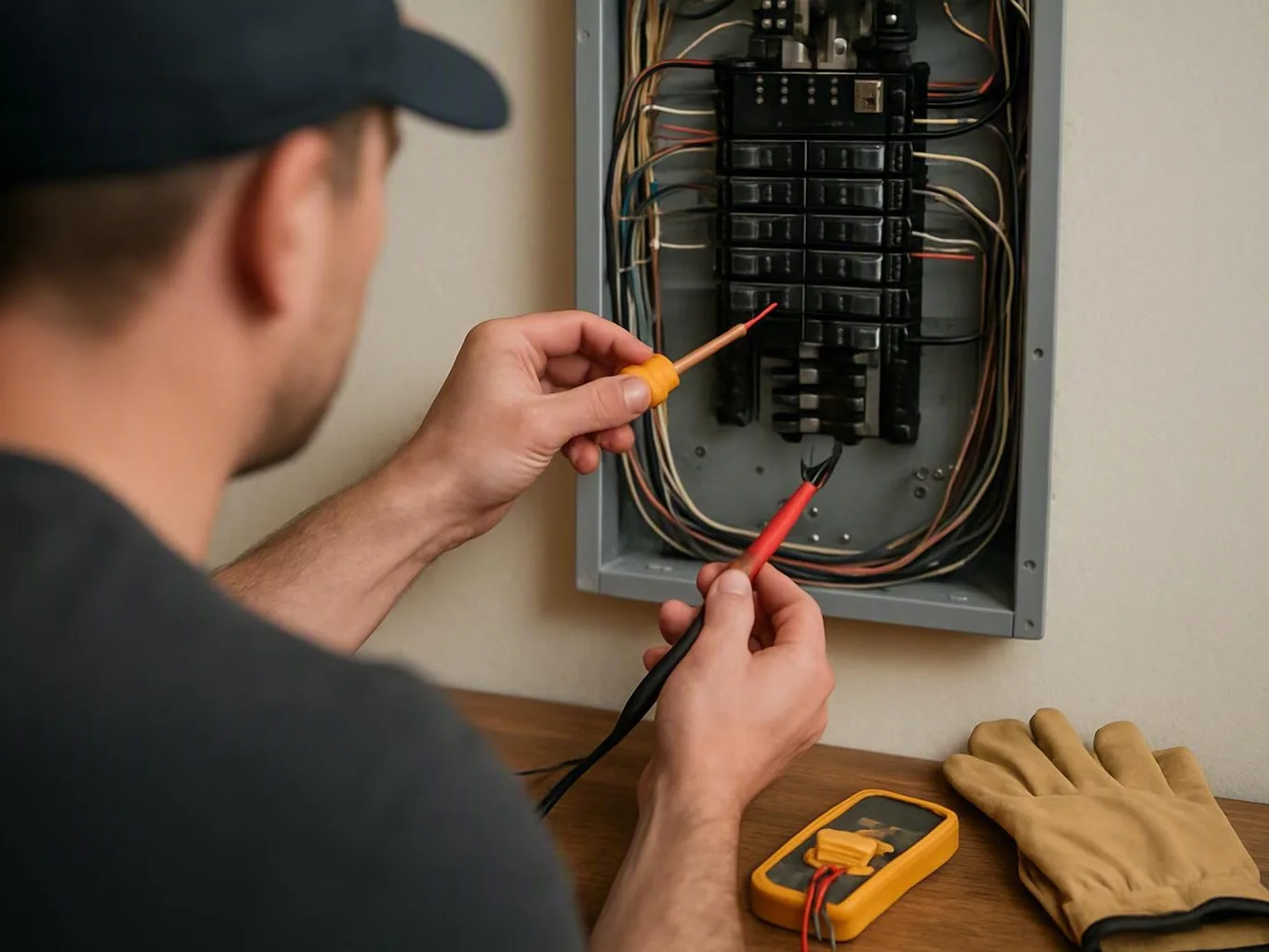
Copper wire affects circuit speed, heat, voltage drop, and safety. A conductor that's too small for its load can overheat. This risk increases with damaged insulation or loose connections. It also increases when many current-carrying conductors share a confined space. Correct sizing helps protective devices respond as designed. It also reduces unnecessary energy loss.
Copper also resists corrosion better than many common conductor materials. Moisture, chemicals, and poor connections can still cause problems. Aluminum wire and copper-clad aluminum have different expansion requirements. They also have different termination and compatibility requirements. A connection that accepts copper isn't automatically approved for every other conductor material.
When Copper Wire Matters Most?
The choice of copper wire becomes important during new construction, remodeling, panel changes, and repairs to older wiring. The electrician must identify the circuit voltage, breaker rating, load type, cable or raceway method, and environmental conditions. This information helps the electrician select a conductor. Kitchens, garages, workshops, outdoor equipment, and heating loads often need careful review. Their loads or surroundings can raise installation demands.
Inspection also matters when wiring shows discoloration, melted insulation, loose terminations, oxidation, or repeated breaker trips. These signs can point to overheating, overload, a poor connection, or a fault elsewhere. A proper evaluation checks conductor size, insulation markings, splices, grounding, and box fill. It also checks compliance with the adopted electrical code before repairs proceed.
How to Evaluate Copper Wire?
- Read the insulation marking and confirm its voltage, temperature, and wet-location ratings.
- Compare the conductor size with the circuit load and required ampacity under the adopted electrical code.
- Check that terminals, lugs, wirenuts, and connectors are listed for copper conductors.
- Look for darkened insulation, melted jackets, corrosion, loose connections, or a burning odor.
- Confirm that grounding and bonding conductors have continuous, properly secured paths.
Related Concepts Compared
Copper Wire vs. Aluminum Wire
Aluminum wire weighs less and expands differently as temperature changes. Terminations and devices must be listed for aluminum when aluminum conductors are present.
Copper Wire vs. Copper-Clad Aluminum
Copper-clad aluminum has an aluminum core covered by a thin copper layer. It is not the same as solid copper and requires identification and compatible terminations.
Copper Wire vs. Romex
Romex is a common trade name for nonmetallic-sheathed cable. A Romex cable can contain copper wire, but copper wire alone does not describe the cable assembly or installation method.
Copper Wire vs. Wire Gauge
Wire gauge is a size system, not a conductor material. Copper wire may be identified by AWG, but AWG does not by itself establish ampacity or approved use.
Expert Note
Do not choose copper wire by gauge alone. The insulation type, terminal rating, ambient temperature, number of current-carrying conductors, and installation location can change the permitted ampacity and wiring method.
Common Mistakes or Myths About Copper Wire
- Assuming a smaller AWG number means a smaller conductor.
- Connecting copper and aluminum conductors without listed, compatible connectors.
- Ignoring insulation ratings because the conductor is made from copper.
- Installing a larger breaker to stop trips without checking conductor size and circuit load.
- Treating a ground wire as a normal current-carrying return conductor.
Copper Wire in Practice: A Real-World Example
A 20-amp kitchen branch circuit may use 12 AWG copper conductors when conditions support it. The breaker, receptacles, cable, grounding path, and terminations must match circuit needs.
Sources & Further Reading on Copper Wire
Related Services
Related Terms
Wire Gauge
Wire Gauge is a numbered system that identifies the diameter and current-carrying capacity of electrical wire…
Current
Current is the movement of electric charge through a conductor, device, or circuit. It's measured in…
Voltage
Voltage is the electrical pressure that pushes electric charge through a circuit. Measured in volts, voltage…
Electrical Grounding
Electrical Grounding is a safety system that connects electrical equipment and circuits to the earth or…
Chris Miller Electric
Have Questions About Copper Wire?
Contact Chris Miller Electric for practical guidance on Copper Wire and related electrician work in Fort Wayne.