What to Know Before Scheduling Electrical Code Corrections
Electrical code correction work involves identifying noncompliant or unsafe electrical conditions, determining the repair scope, coordinating inspection needs, and confirming the completed work. Chris Miller Electric handles electrical code corrections, inspections, wiring repairs, and panel repairs with a documented plan for the property owner.
Request an EstimateWhat Electrical Code Correction Work Involves
Electrical code correction identifies electrical conditions that do not meet applicable safety requirements and establishes the repairs needed to address them.
We review the inspection notice, affected electrical wiring, electrical panel, connections, and grounding paths. Our team separates urgent hazards from other repair items so the repair scope is clear before work begins.
Electrical code correction may include wiring repair, circuit correction, grounding correction, outlet correction, panel labeling, or electrical panel repair. We document the work needed and explain how the completed repairs will support inspection readiness.
Why Inspections Matter During Renovations
Electrical inspections matter during renovations because walls, circuits, panels, and connections can be affected by new construction work.
Existing wiring may be uncovered, extended, relocated, or placed behind new finishes. We review renovation plans and visible conditions together so new work does not leave an unsafe electrical condition concealed.
Renovation work can also change access to junction boxes, branch circuits, and electrical panels. Our team coordinates the electrical scope with the available access and identifies work that must be completed before walls or ceilings are closed.
Mistakes That Delay Electrical Code Corrections
Electrical code violations often take longer to resolve when the repair scope is based on assumptions instead of a full review.
We connect each correction to electrical safety, related equipment, inspection approval, and the access needed to complete the work.
Mistake: Treating an Inspection Notice as the Complete Repair Plan
An inspection notice identifies reported conditions, but it may not describe every related repair needed for safe completion. This happens when the notice is read as a parts list instead of a starting point for assessment.
The cost of this mistake comes from return visits, added access work, and repairs discovered after the first correction. We review the notice, inspect related wiring, and build a repair scope that addresses the affected system.
Mistake: Repairing One Visible Wiring Problem Without Checking the Circuit
A visible wiring defect can be connected to a larger branch circuit problem. The defect may involve incorrect connections, damaged insulation, poor grounding, or unsuitable circuit protection.
The cost depends on how much of the branch circuit requires access and repair. We perform circuit testing, trace related wiring, and verify that the correction works as part of the complete circuit.
Mistake: Ignoring Electrical Panel Conditions During Corrections
An electrical panel can contain conditions that affect a wiring correction, including a mismatched circuit breaker, poor connections, or missing panel labeling.
Panel-related costs are shaped by the condition of the equipment, the required access, and whether related circuits need correction. We inspect the electrical panel, complete needed panel repair, and identify circuits clearly.
Mistake: Choosing Materials Without Matching the Existing Electrical System
Electrical materials must match the existing electrical system, including wire size, circuit protection, conductor type, and connection method.
Using mismatched materials can create another code violation and expand the repair scope. We select materials that suit the circuit design and verify that the wire size and circuit protection work together.
Mistake: Starting Demolition Before the Electrical Scope Is Clear
Demolition before repair planning can remove useful access or expose concealed wiring without a safe correction plan.
Added costs may come from damaged finishes, difficult access, or extra work to locate concealed wiring. We review renovation plans and access conditions before demolition so the electrical work can be sequenced properly.
Mistake: Assuming a Previous Repair Meets Current Requirements
A previous electrical repair may still have an unsafe connection, unsuitable material, or missing documentation.
Correction costs depend on whether the earlier installation can be verified or must be opened and rebuilt. We inspect the existing installation, test affected circuits, and document the work needed for code compliance.
Mistake: Leaving Documentation and Panel Labels Until the End
Electrical documentation and panel labeling support inspection readiness by showing how circuits and repairs are identified.
Late documentation can require additional tracing, access, and correction work. We identify circuits during the repair process and keep repair documentation aligned with the completed electrical work.
Mistake: Scheduling the Follow-Up Inspection Before Corrections Are Verified
A follow-up inspection should be scheduled after the repaired conditions and affected circuits are verified.
Premature scheduling can lead to another inspection visit if testing or related repairs are incomplete. We complete repair verification, perform electrical testing, and identify remaining inspection needs before the property is presented for review.
How We Prioritize Multiple Electrical Repair Needs
We prioritize electrical repairs by addressing immediate safety hazards, conditions that can damage equipment, and corrections that affect inspection approval.
Our team explains why each item matters so the property owner can make decisions with a clear repair scope.
What Changes the Scope of Electrical Code Correction Work
Electrical code correction scope changes when the affected wiring, panel equipment, access conditions, or inspection requirements change.
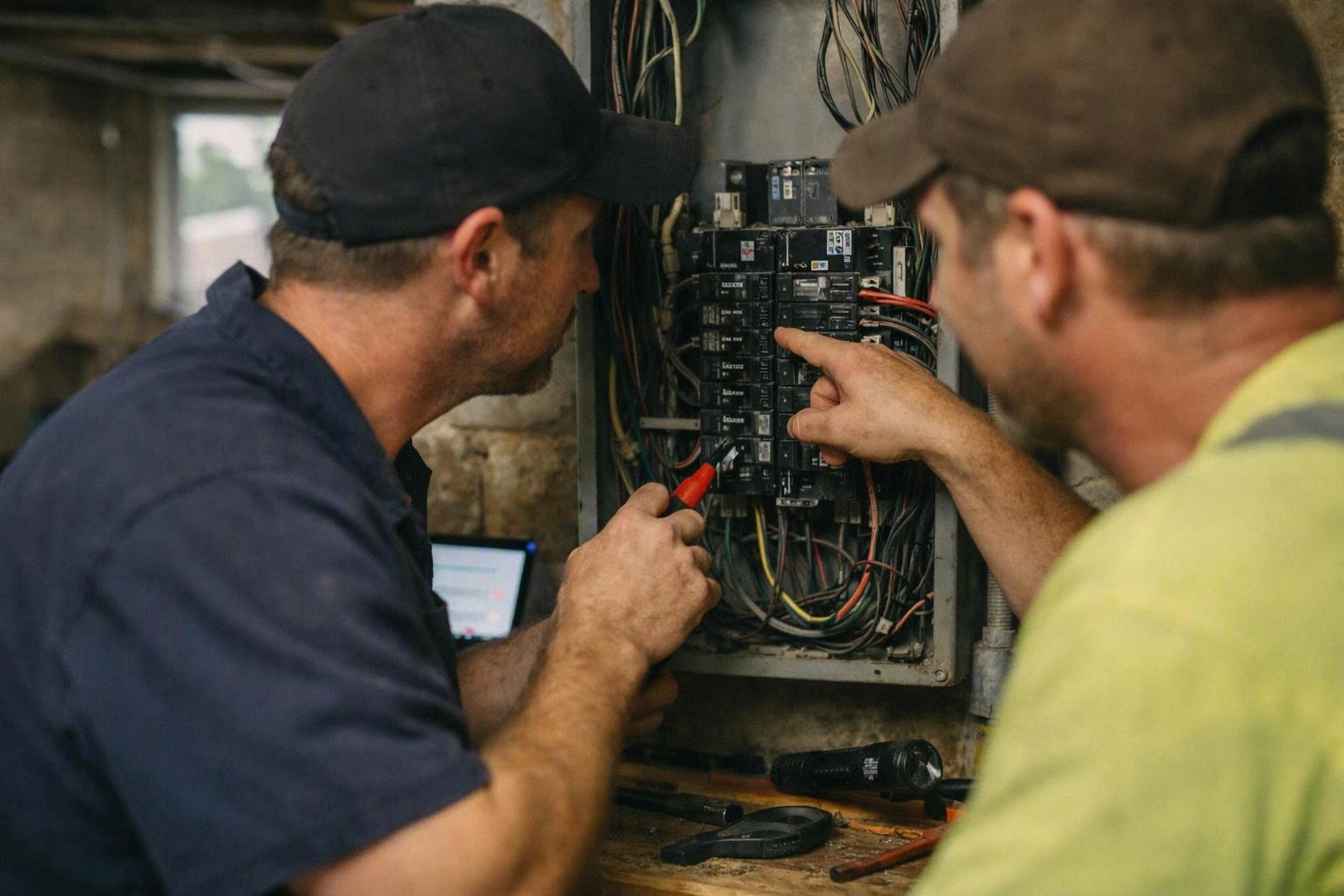
We review these factors before preparing the work plan so the quote reflects the actual conditions found at the property.
| Scope factor | Why it matters | What we review |
|---|---|---|
| Electrical wiring repair | The defect may extend beyond the visible point. | Conductors, connections, junction boxes, and circuit testing. |
| Electrical panel repair | Panel conditions can affect circuit protection and inspection approval. | Circuit breakers, terminations, grounding, and panel labeling. |
| Access conditions | Concealed wiring may require planned access before finishes are restored. | Walls, ceilings, crawl areas, equipment locations, and safe work access. |
| Inspection requirements | Required documentation or correction details can affect readiness. | Inspection notices, repair records, testing, and follow-up needs. |
How to Prepare for an Electrical Code Correction Appointment
Preparing the inspection notice, renovation information, repair history, and access details helps us evaluate the electrical correction scope efficiently.
Gather the available records before the appointment and make sure the affected areas can be reached safely.
When to Call Chris Miller Electric Instead of Doing It Yourself
Call Chris Miller Electric when the correction involves energized components, panel work, concealed wiring, inspection requirements, or unsafe access.
Some preparation is safe for a property owner, such as gathering records and clearing access. Electrical testing, panel work, and wiring repairs require our team to control the work safely.
How We Confirm Electrical Corrections Are Ready for Inspection
We confirm electrical corrections by reviewing the repaired conditions, testing the affected circuits, checking related equipment, and documenting remaining inspection needs.
Our team checks that wiring connections are secure, circuit protection matches the circuit, equipment is accessible, and panel labeling supports circuit identification.
We also compare the completed work with the inspection notice and repair scope. This repair verification helps identify unresolved conditions before the follow-up inspection.
What to Ask Before Scheduling the Work
Ask how the inspection notice will be reviewed, what access is needed, and how the repair scope will be documented before scheduling electrical code correction work.
Chris Miller Electric explains the affected conditions, the work included in the quote, the testing process, and any inspection coordination needed for the property.
Contact us to discuss the inspection notice and arrange an evaluation of the electrical correction scope.
Questions About Electrical Code Corrections
What should I bring to an electrical code correction appointment?
Chris Miller Electric needs the inspection notice, renovation plans, repair history, and access details to evaluate the correction scope efficiently.
Can an electrical code correction affect other circuits in the building?
Yes, an electrical code correction can affect other circuits when they share a panel, branch circuit path, grounding connection, junction box, or related wiring.
What happens if concealed wiring is discovered during an electrical correction?
Concealed wiring discovered during an electrical correction is assessed for condition, circuit connection, access needs, and code compliance before the repair scope is updated.
How should renovation plans be coordinated with an electrical inspection?
Renovation plans should show planned walls, ceilings, equipment, and access changes so the electrical inspection can account for affected wiring and panels.
What information should an inspection notice include?
An inspection notice should identify the affected property areas, reported electrical code violations, required corrections, and any follow-up inspection instructions.
Related Resources
How Long Does an Electrical Panel Upgrade Take in Fort Wayne, IN?
How Long It TakesWhole-Home Rewiring Timeline: How Long It Takes in Fort Wayne, IN
What It CostsHow Much Does an Electrician Cost in Fort Wayne?
What It CostsWhole-House Rewiring Cost Factors: Home Size, Access, Wiring Materials, and Project Scope