
What Is a Ballast?
A ballast is a device that controls electrical current in certain light fixtures. It helps fluorescent and some high-intensity discharge lamps start and operate without drawing uncontrolled current. Ballasts may use magnetic or electronic designs, and the correct type must match the lamp, fixture, and supply characteristics.
Quick Facts About Ballast
Category
Lighting control component
Used for
Fluorescent and some HID lamps
Common confusion
A ballast is not the lamp itself
Also called
Light Ballast, Lamp ballast
Often discussed with
Light Fixture Installation
Key Takeaways About Ballast
- A ballast belongs to the fixture’s lighting control system.
- Lamp and ballast compatibility affects reliable operation.
- An LED fixture may use a driver instead of a ballast.
How Ballast Works

A ballast controls the current flowing through a compatible lamp. During startup, the ballast helps establish the electrical conditions needed for the lamp to begin producing light. After startup, the ballast continues regulating current as the lamp operates. Magnetic ballasts perform this work through coils, while electronic ballasts use electronic circuits.
Related glossary terms: Capacitor, Voltage Drop, Inverter.
Ballast problems can cause flickering, delayed startup, humming, repeated lamp failure, or a fixture that stays dark. A replacement must match the lamp type and fixture design. Some newer fixtures use an LED driver, which performs a related control function but is designed for light-emitting diodes. A fixture conversion may remove the need for the original ballast, depending on the equipment and wiring plan.
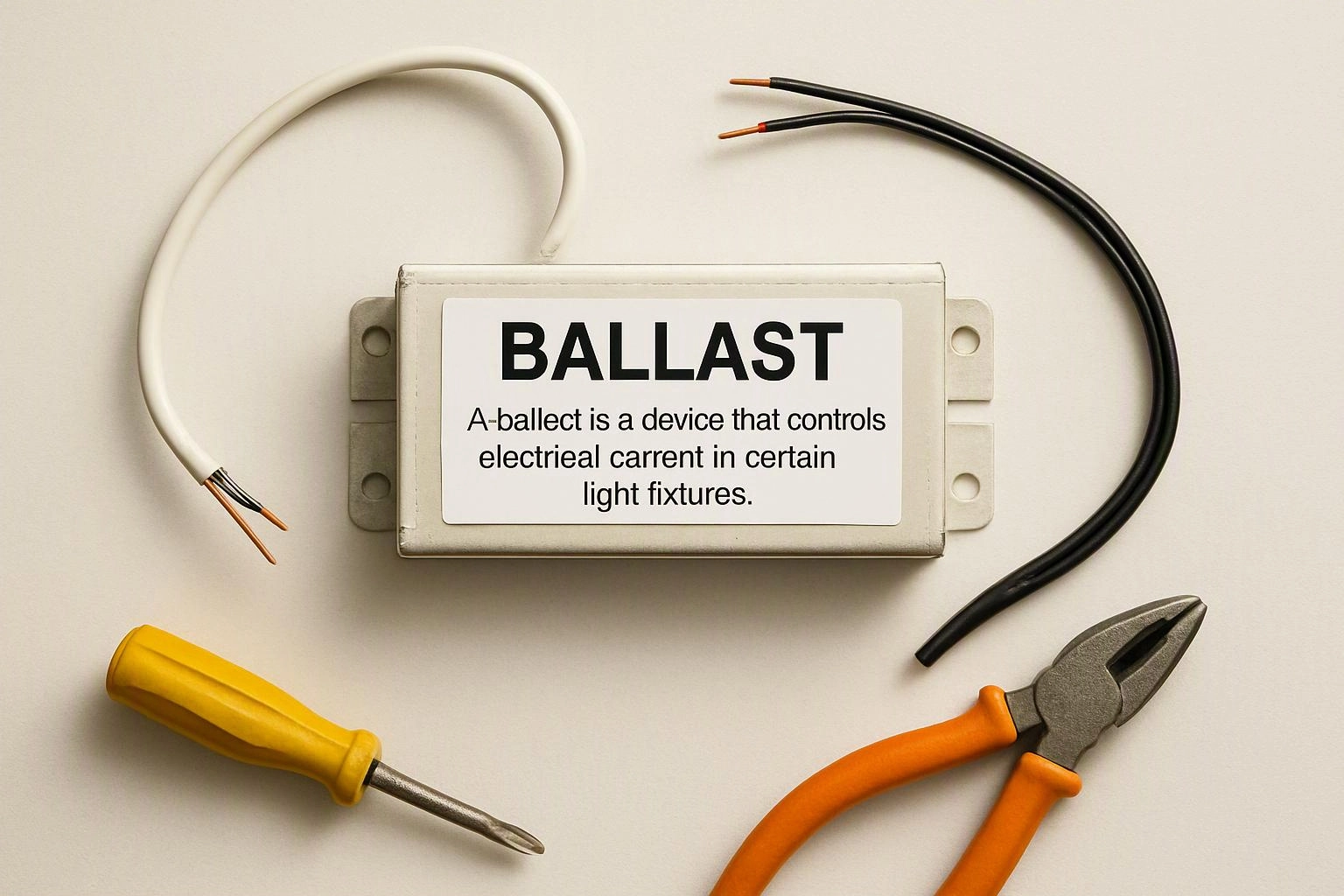
From the Chris Miller Electric team
When we handle light fixture installation, we identify the lamp and fixture type before selecting a ballast. We check the existing wiring and mounting arrangement, then verify that the replacement component matches the fixture’s electrical design. We also look for signs that an LED driver or a different fixture design is more appropriate.
Ballast in Practice: A Real-World Example
A fluorescent ceiling fixture that flickers after lamp replacement may have a failing ballast. During light fixture installation, the electrician can inspect the fixture, confirm the lamp and ballast match, and replace the suitable component when needed.
Related Services
Related Terms
Capacitor
A capacitor is an electrical component that stores energy briefly and releases it when a circuit…
Voltage Drop
Voltage Drop is the reduction in electrical pressure that occurs as current travels through a conductor…
Inverter
An inverter is an electrical device that changes direct current from a battery or solar array…
Wire Gauge
Wire Gauge is a standardized system for describing a conductor’s diameter and current-carrying capacity. The gauge…
Chris Miller Electric
Have Questions About Ballast?
Contact Chris Miller Electric for practical guidance on Ballast and related 24 hour electrician work in Fort Wayne.