
What Is Voltage Drop?
Voltage Drop is the reduction in electrical pressure that occurs as current travels through a conductor, connection, or device. The reduction can leave less voltage available at the load than the source provides. Conductor length, wire size, connection quality, and electrical demand all influence how much voltage reaches equipment.
Quick Facts About Voltage Drop
Category
Electrical performance condition
Used for
Troubleshooting power delivery
Common confusion
Mistaken for a breaker trip
Also called
Voltage Loss
Often discussed with
Electrical Troubleshooting
Key Takeaways About Voltage Drop
- Voltage Drop occurs along energized conductors and connections.
- Longer runs and higher demand increase the loss.
- Voltage Drop is not the same as a tripped breaker.
How Voltage Drop Works
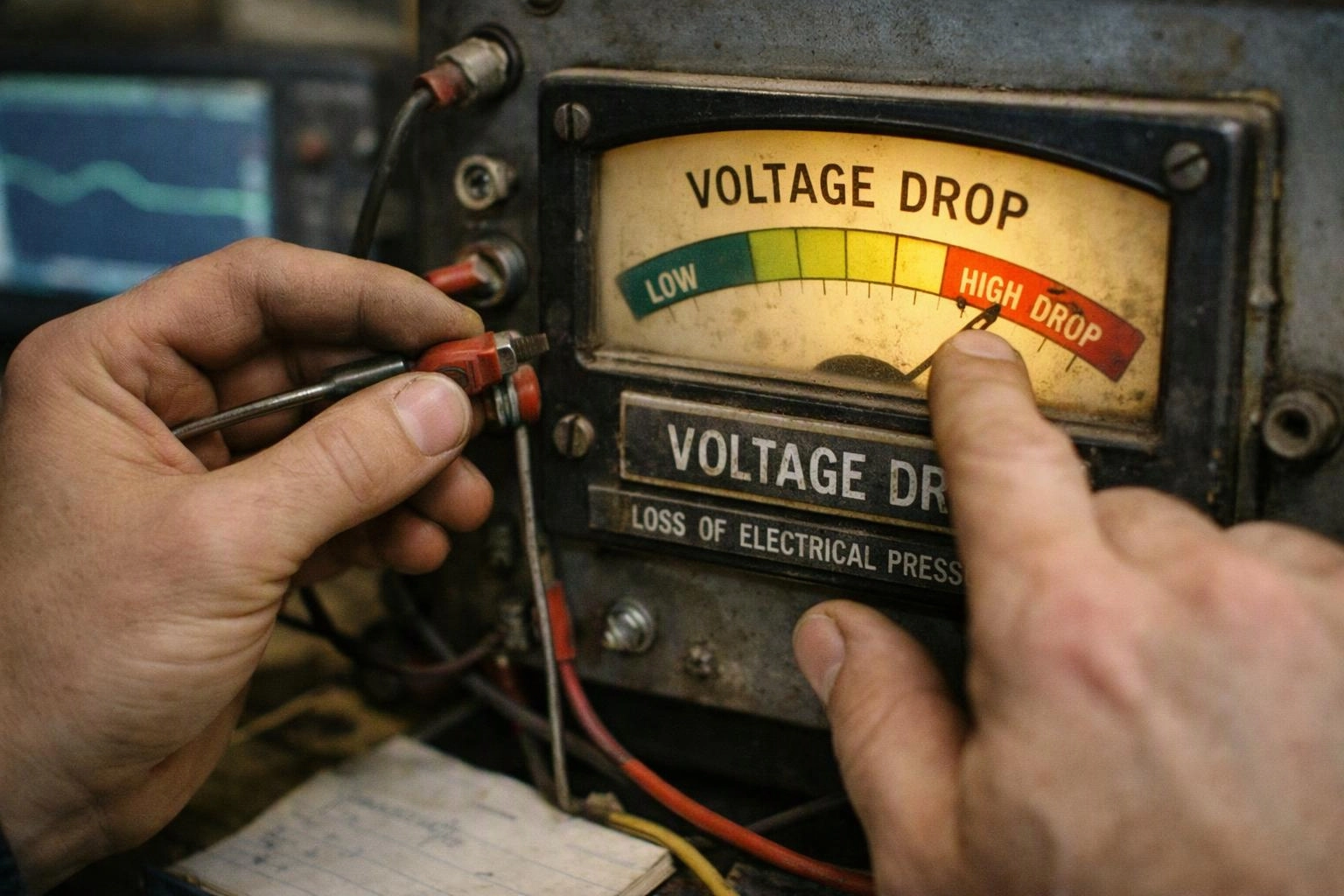
Voltage Drop develops as current meets resistance in a circuit path. Every conductor has resistance, and connections add resistance when they are loose, damaged, corroded, or poorly made. A longer conductor path or a circuit serving a demanding load can produce a greater reduction before power reaches the equipment.
Related glossary terms: Wire Gauge, Ampacity, Feeder.
An electrician checks voltage at the source and then at the load while the circuit operates. Comparing those readings shows whether the circuit delivers the expected electrical pressure under working conditions. A loose terminal, undersized conductor, damaged splice, or overloaded circuit can create a noticeable difference. Equipment may respond with dim lighting, weak motor operation, nuisance shutdowns, or unreliable performance. Testing under load helps separate a wiring issue from a problem inside the equipment.
From the Chris Miller Electric team
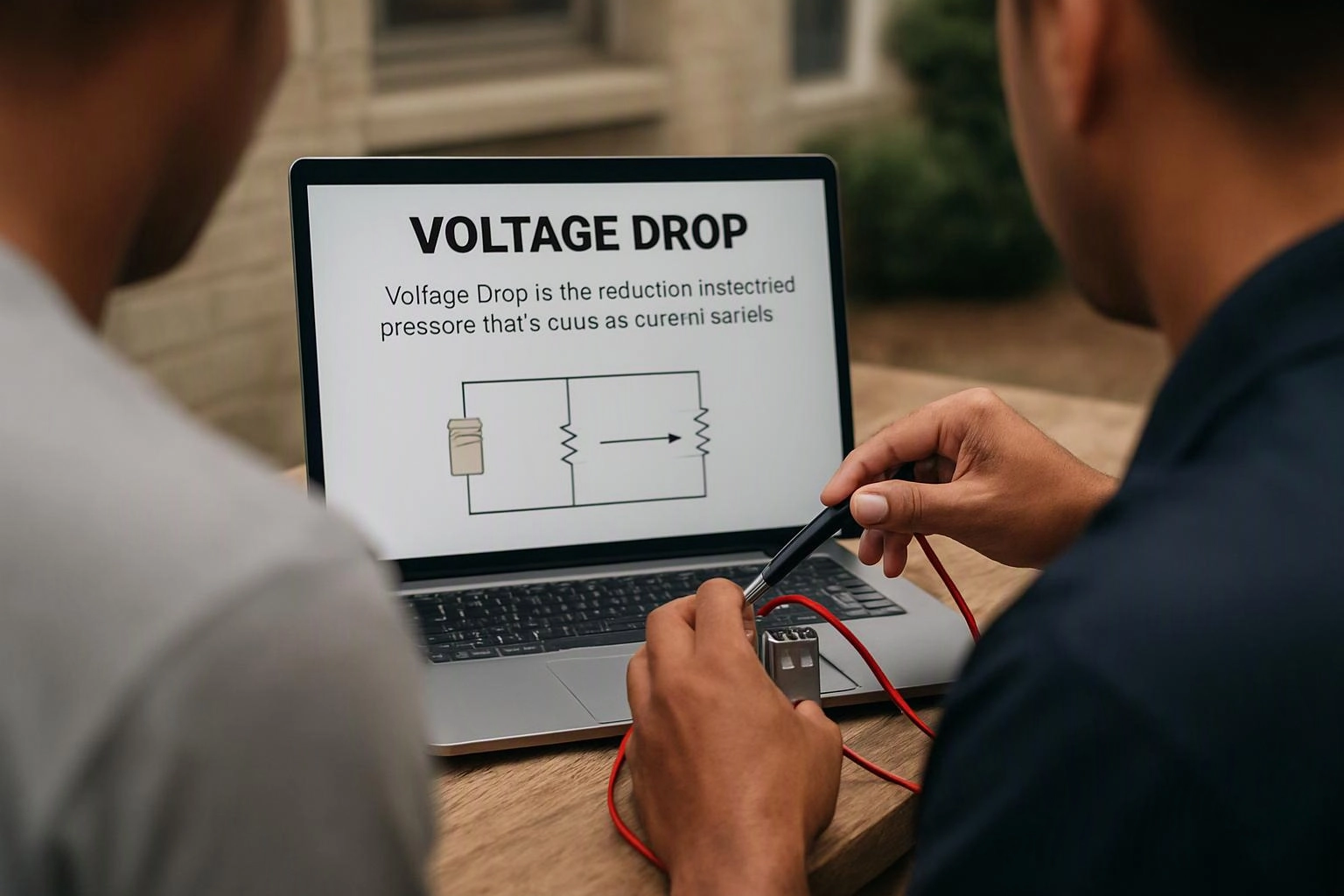
When we investigate Voltage Drop, we compare readings at the supply point and at the operating load. We inspect accessible terminations, splices, conductors, and the circuit path for conditions that can add resistance. Our team also considers whether the symptom appears only while equipment is running.
Voltage Drop in Practice: A Real-World Example
A homeowner notices that a detached-garage light dims when a motor-driven tool starts. Electrical troubleshooting can compare voltage at the panel and at the receptacle while the tool operates, then inspect the circuit path for resistance or connection problems.
Related Services
Related Terms
Wire Gauge
Wire Gauge is a standardized system for describing a conductor’s diameter and current-carrying capacity. The gauge…
Ampacity
Ampacity is the maximum current a conductor can carry continuously under stated conditions without exceeding its…
Feeder
A feeder is an electrical conductor or group of conductors that carries power from service equipment…
Electrical Junction Box
An electrical junction box is an enclosure that protects and contains wire connections where circuits join…
Chris Miller Electric
Have Questions About Voltage Drop?
Contact Chris Miller Electric for practical guidance on Voltage Drop and related 24 hour electrician work in Fort Wayne.