Emergency EV Charger and Home Battery Backup Repair
Emergency EV charger repair starts with stopping the charge, checking for visible hazards, and isolating the affected circuit without opening equipment. Do not use a damaged charger, battery, outlet, or electrical panel. Chris Miller Electric diagnoses the charger, supply circuit, protection devices, and home battery system before completing the repair.
Request an Estimate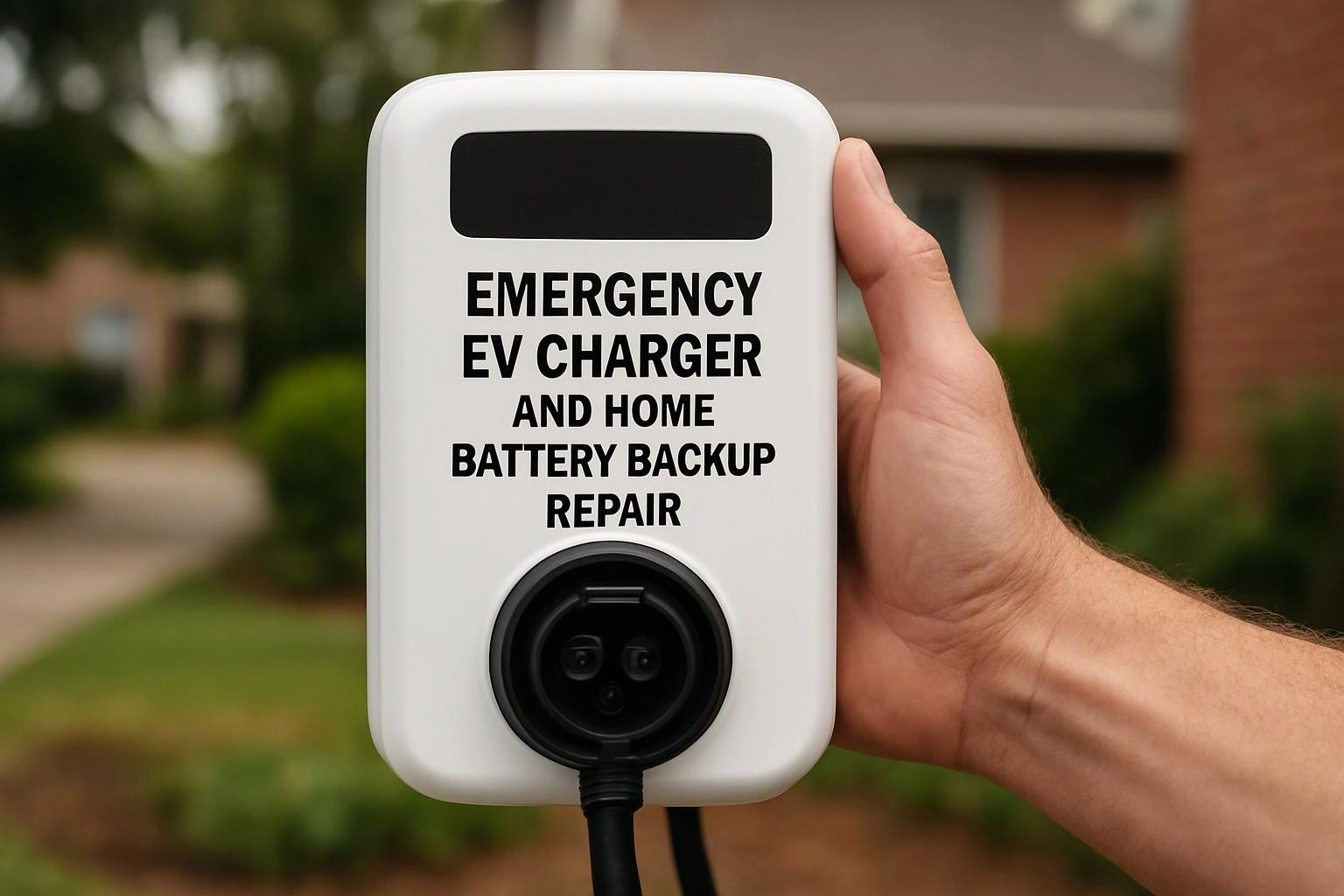
What to Do When an EV Charger Stops Working
An EV charger that stops working should be taken out of service while you check for obvious hazards and identify whether the fault is at the vehicle, charger, outlet, or electrical supply.
The electric vehicle, charging cable, EV charger, branch circuit, and electrical panel can each cause a charging failure. Our team separates those possible sources before we complete emergency electrical repair.
Signs an EV Charger Needs Emergency Repair
Emergency EV charger repair is appropriate when charging equipment creates a shock hazard, fire concern, or unsafe loss of power control. Stop using the equipment and keep people away from the affected area.
We assess the equipment before recommending a reset or continued use. Smoke, fire, or active arcing requires immediate fire response and emergency services when needed.
Common Causes of EV Charger and Battery Backup Failure
EV charging failure and battery backup failure can begin with a supply problem, a protection device, or a communication fault. Our diagnostic process identifies the failed part before repair.
We inspect grounding, connections, overcurrent protection, control signals, and fault codes. We do not treat a system reset as a complete repair when the underlying electrical fault remains.
When Home Battery Backup Problems Become Electrical Emergencies
A home battery backup problem becomes an electrical emergency when the system shows heat, smoke, damage, leaking, arcing, unusual noise, or unsafe loss of power control.
The battery enclosure protects stored energy, while the inverter changes power for the home and the transfer switch manages the connection between utility power and backup power. Damage to any of these parts can create an electrical fire hazard or an uncontrolled power path.
We provide Emergency Home Battery Backup Repair by isolating the affected equipment, checking the inverter and transfer switch, and evaluating utility power connections. Do not remove a battery enclosure cover or attempt to bypass a transfer switch.
How to Stay Safe While Waiting for Emergency Electrical Help
Electrical safety while waiting for emergency help means keeping away from damaged equipment, avoiding water contact, and shutting off power only when the disconnect is clearly accessible and safe to operate.
Our crew needs clear information about smoke, heat, water exposure, breaker activity, and fault codes. Keep people away from the system until we complete circuit isolation and testing.
How We Diagnose EV Charger and Battery Backup Faults
Electrical diagnostic testing starts with a visual review of the EV charging station, battery equipment, electrical panel, and related controls. We then identify whether the problem is at the vehicle, charger, branch circuit, grounding system, or backup equipment.
Our team checks conductor connections, voltage conditions, grounding, overcurrent protection, disconnects, and available fault codes. We test the battery inverter and transfer equipment without bypassing protective controls.
We use circuit isolation to separate the charging fault from a home electrical fault. The repair plan explains the failed component, the safe power restoration steps, and any follow-up electrical inspection needed before normal use.
What We Check After Emergency Electrical Repair
After emergency electrical repair, we verify that the repaired circuit and connected equipment operate safely under the intended controls. The final checks cover the fault source and the protective devices that should respond if a future problem occurs.
| System area | What we verify |
|---|---|
| Repaired circuit | Connections, grounding, circuit behavior, and safe power delivery. |
| EV charger | Charging controls, connector condition, fault status, and communication with the vehicle. |
| Home battery backup | Battery inverter operation, battery enclosure condition, and backup power controls. |
| Protective devices | Circuit breaker, disconnect switch, grounding, and overcurrent protection response. |
| System controls | Transfer switch operation, safe shutdown behavior, and restoration of utility or backup power. |
We explain what was repaired and what safe operation looks like before returning the equipment to service. We also identify conditions that require another shutdown or inspection.
How to Prevent Repeat EV Charger and Battery Backup Problems
Preventive care reduces avoidable charging faults and helps reveal changes before they become an emergency. We can review the equipment condition and electrical load when recurring problems point to a wider system issue.
We look for heat, loose connections, water exposure, grounding concerns, and signs of surge damage during an electrical inspection. Preventive work cannot make damaged equipment safe, so damaged systems still need fault diagnosis.
When to Request Emergency EV Charger Repair
Request emergency EV charger repair when the charger remains unusable after safe basic checks or when the equipment shows heat, burning, sparks, shock, water damage, or repeated breaker trips.
Request emergency home battery backup repair when the battery system has an inverter fault, smoke, leaking, arcing, unusual noise, or unsafe control of utility and backup power. We provide emergency electrical repair by isolating the fault, testing the affected components, and restoring power only when the system is safe.
Contact us with the equipment type, visible damage, fault code, breaker activity, water exposure, and whether utility power or backup power is affected. The work scope and quote depend on the failed equipment, circuit condition, required testing, and parts needed for safe power restoration.
Chris Miller Electric is ready to review the hazard and guide the next safe step.
Questions About EV Charger and Home Battery Backup Repair
Can a tripped breaker cause an EV charger to stop working?
Yes, a tripped breaker can stop an EV charger when the branch circuit loses power or the breaker responds to an electrical fault. Chris Miller Electric checks the charger, circuit load, connections, grounding, and protective devices before resetting or repairing the system.
Should I unplug an EV charger that smells hot?
Yes, stop charging and avoid touching hot or damaged equipment. Keep away from the charger and contact us for emergency electrical repair if the smell continues or the equipment shows heat, smoke, melting, or sparks.
What should I do if my home battery backup shows a fault?
A home battery backup fault requires safe shutdown guidance, especially when the system shows heat, smoke, leaking, arcing, unusual noise, or loss of power control. Keep the battery enclosure closed, avoid water contact, record the fault code if safe, and contact us for diagnosis.
Can water damage make an EV charger unsafe?
Yes, water damage can make an EV charger unsafe by affecting insulation, grounding, connections, and control parts. Do not use or dry damaged equipment yourself, and keep away until we complete an electrical inspection.
What information should I provide when requesting emergency electrical repair?
Provide the equipment type, visible damage, fault code, breaker activity, water exposure, unusual sounds, and whether utility power or backup power is affected. This information helps us plan safe circuit isolation and begin fault diagnosis.