Generator Wiring and Transfer Switch Checklist Before You Use Backup Power
Generator wiring and transfer switch checklists confirm that the generator, inlet, transfer equipment, grounding, and connected circuits are ready for safe backup power use; Chris Miller Electric performs the installation checks, wiring work, and electrical inspections.
Request an Estimate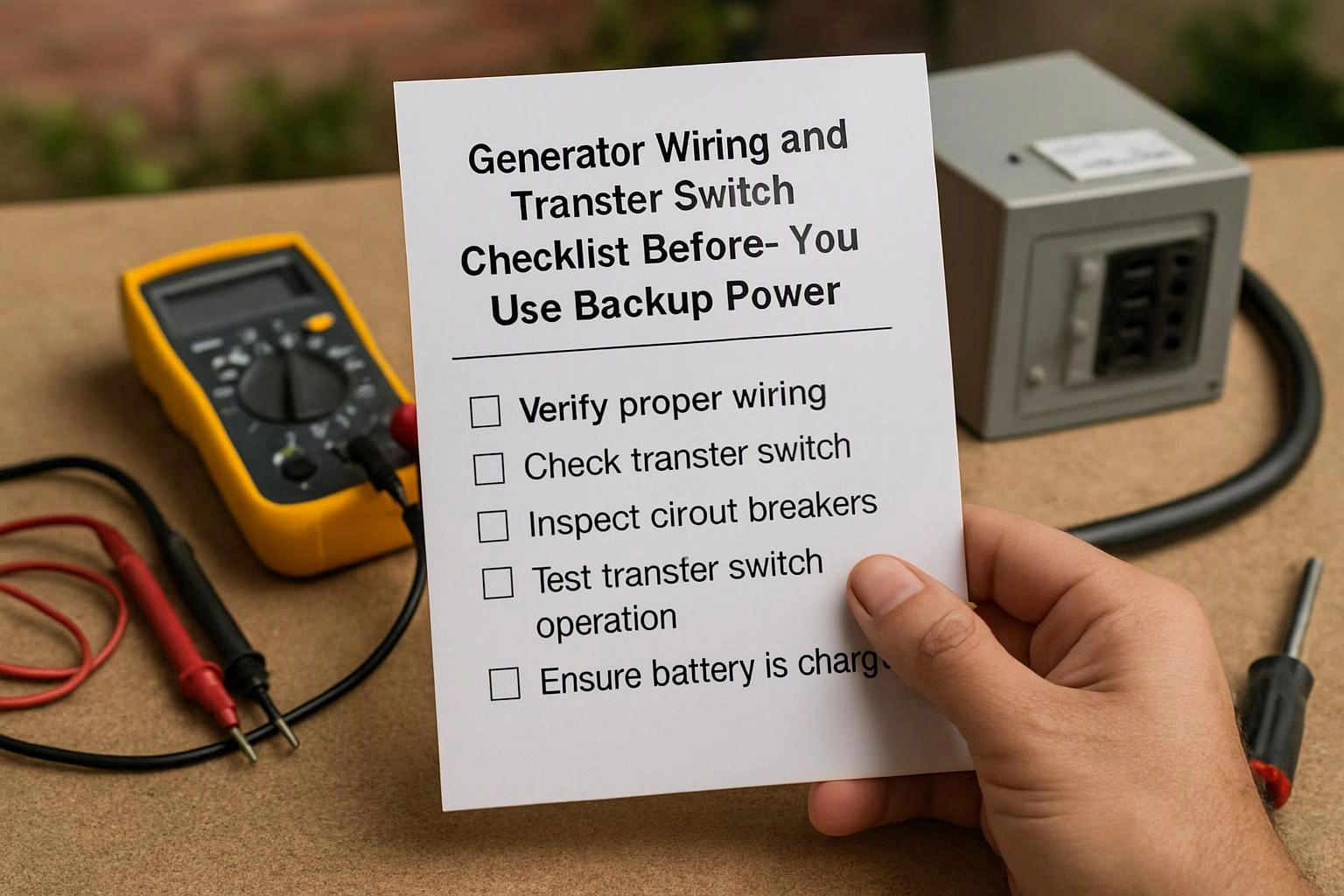
What This Generator Transfer Switch Checklist Confirms
Generator transfer switch electrical checklists verify that the generator, transfer equipment, connected circuits, and backup power safety controls work together.
A standby generator can provide backup power through an automatic transfer switch. A portable generator can connect through a generator inlet and a manual transfer switch when the system is designed for that use.
We check the generator inlet, electrical panel, transfer mechanism, conductors, terminals, and selected backup circuits. Our team also checks utility isolation, grounding and bonding, and the condition of the power distribution system before testing.
Does Your Generator Need a Transfer Switch?
A generator connected to building wiring needs transfer equipment that separates generator power from utility power and prevents backfeed.
A transfer switch controls the generator connection to the electrical panel. The equipment provides utility isolation so generator power cannot energize utility conductors while utility power is present.
We select and install the correct electrical changeover equipment for the generator connection. A properly arranged system may use an automatic transfer switch, a manual transfer switch, or a listed panel interlock that provides backfeed protection.
Before You Start the Generator Wiring Checklist
The pre-installation checklist confirms that the generator location, fuel supply, connection equipment, and electrical panel can support safe backup power.
We review each item before beginning generator wiring so the installation plan matches the equipment and the circuits you need to operate.
During the Transfer Switch Installation Checklist
The installation checklist confirms that the transfer switch connects the generator to approved circuits without weakening the electrical system.
Our crew follows the conductors from the generator connection through the transfer equipment and into the selected branch circuits. We also verify that the enclosure, terminals, and protective devices are arranged for safe shutdown and maintenance.
After Wiring: Test the Backup Power System
The final test confirms that the backup power system starts, transfers power, supplies the selected circuits, and returns safely to utility power.
We perform system testing in a controlled sequence. Our team records the results of the electrical inspection and corrects wiring or operating problems before the system is placed into regular use.
Red Flags That Mean You Should Stop Using the System
Stop using the backup power system when the equipment shows signs of overheating, unstable operation, or unsafe electrical behavior.
Turn off the generator when safe to do so and contact Chris Miller Electric for an inspection. Do not open energized equipment or reset a breaker repeatedly.
Why Is the Generator Not Powering the House?
A generator may fail to power the house because the generator is not producing output, the transfer switch is not transferring, the connection is incomplete, or the selected circuits are not supplied.
We check generator output, the transfer switch position, the main breaker, the generator breaker, and the inlet connection. We also confirm that the selected circuits are included in the backup plan and that the fuel supply supports generator operation.
A house may appear to have no generator power when only selected essential loads are connected. Our team traces the circuit selection through the electrical panel and verifies voltage at the correct points.
When Generator Wiring Needs an Electrical Inspection
Generator wiring needs an electrical inspection when a transfer switch installation changes the panel, adds a generator breaker, modifies branch circuits, or changes grounding and bonding.
We inspect the wiring path, transfer equipment, service equipment, panel modifications, conductor terminations, and protective devices. We also check the installation for code compliance and safe utility isolation.
Contact Generator Wiring when the system has unknown modifications, damaged equipment, repeated breaker trips, or signs of overheating. We can review the existing setup before recommending repairs or additional work.
How Chris Miller Electric Checks Generator Backup Systems
Chris Miller Electric checks generator backup systems by reviewing the generator installation, tracing generator wiring, inspecting the transfer switch installation, and testing the connected circuits.
We begin with the generator, generator inlet, electrical panel, fuel connection, and transfer equipment. Our team then checks conductors, conduit, grounding and bonding, neutral separation, overcurrent protection, and circuit selection.
We complete system testing with generator startup, transfer operation, load testing, voltage verification, and utility restoration. We explain the controls and stop-use warnings so you understand how to operate the backup power system safely.
To request an estimate for generator installation, generator wiring, or transfer switch work, contact Chris Miller Electric through our service team.
Questions About Generator Transfer Switch Wiring
Can a transfer switch power every circuit in a house?
A transfer switch can power every circuit only when the generator output, transfer equipment, service equipment, and connected load are designed for that demand. Chris Miller Electric reviews the load and selects essential circuits when the generator cannot support the whole electrical panel.
Can I test a generator transfer switch without connecting a generator?
A generator transfer switch can receive limited operational checks without a connected generator, but a complete backup power test requires the generator connection and its output. We verify the equipment safely and avoid forcing a transfer mechanism that is not designed for manual testing.
What should I do if the transfer switch makes noise or smells hot?
Turn off the generator when safe, avoid touching the transfer switch, and contact Chris Miller Electric for an electrical inspection. Noise or a hot smell can point to a loose connection, damaged component, overload, or transfer problem.