How Long Does EV Charger Installation Take in Fort Wayne, IN?
EV charger installation usually takes a few hours to one full day. This estimate fits a basic home project with a nearby panel and short wire route. Work may take longer if the panel needs an upgrade or the charger sits far away. Permits, inspections, and finished walls can also add time. Chris Miller Electric can check your system and explain the work needed. We serve home EV charging projects in Fort Wayne, IN.
Get a Free EstimateHow Long Does EV Charger Installation Usually Take?
A Level 2 EV charger installs faster with an open panel and short cable route. Extra panel work, long wires, or permits can extend the job.
A basic home electric vehicle charger installation often uses a dedicated 240-volt circuit. This circuit runs from the panel to a garage or outside wall. The visit may include planning, wiring, mounting, testing, and user guidance.
Most simple projects take about three hours to one working day. This range helps with planning, but it isn't a promise. The charger model and home wiring can change the schedule.
Electric Vehicle Charger Installation in Fort Wayne often takes place near a garage or driveway. Our Electrician checks the wire route before work starts. You'll then have a clearer schedule.
Typical EV Charger Installation Timelines by Project Scope
EV charger installation duration depends on the project size. Simple jobs often take a few hours. Average jobs may take most of one day. Complex jobs can take longer because of panel work or permits.
| Project scope | Typical duration range | Common conditions |
|---|---|---|
| Simple | A few hours | Nearby accessible panel, short wiring route, available capacity, surface-mounted equipment |
| Average | Most of one day | New dedicated circuit, moderate cable distance, garage or exterior installation, standard permitting workflow |
| Complex | One day or longer | Electrical panel upgrade, long or concealed wiring route, limited capacity, difficult access, inspection or corrective work |
A simple Level 2 charger may be ready in one visit. This works when the panel has space and the wire route stays open. Average jobs may need more garage wiring or conduit. Complex jobs may need another visit for upgrades, permits, or inspections.
What Can Make the Installation Faster or Take Longer?
Several parts of the home affect installation time. These include panel space, charger location, wire distance, and wall access. Permits and the home’s wiring can also change the schedule.
A detached garage may need outdoor conduit or underground work. A finished garage may need careful wall and ceiling access. These details affect labor time and job order.
What Happens During a Home EV Charger Installation?
A home EV charger installation starts with an electrical check and load calculation. The electrician checks the panel, charger site, and wire route. Next, the team installs the circuit, connects the equipment, and tests charging. Permit or inspection steps may follow.
The load calculation shows if the home can support the charger safely. Our team also checks weather exposure and cable access. Good planning helps prevent surprises during the job.
When Does an EV Charger Need a Dedicated Circuit or Panel Upgrade?
A dedicated circuit is normally needed for a Level 2 EV charger. It gives the charger the right wires and safety protection. A panel upgrade may be needed when the service lacks capacity or breaker space.
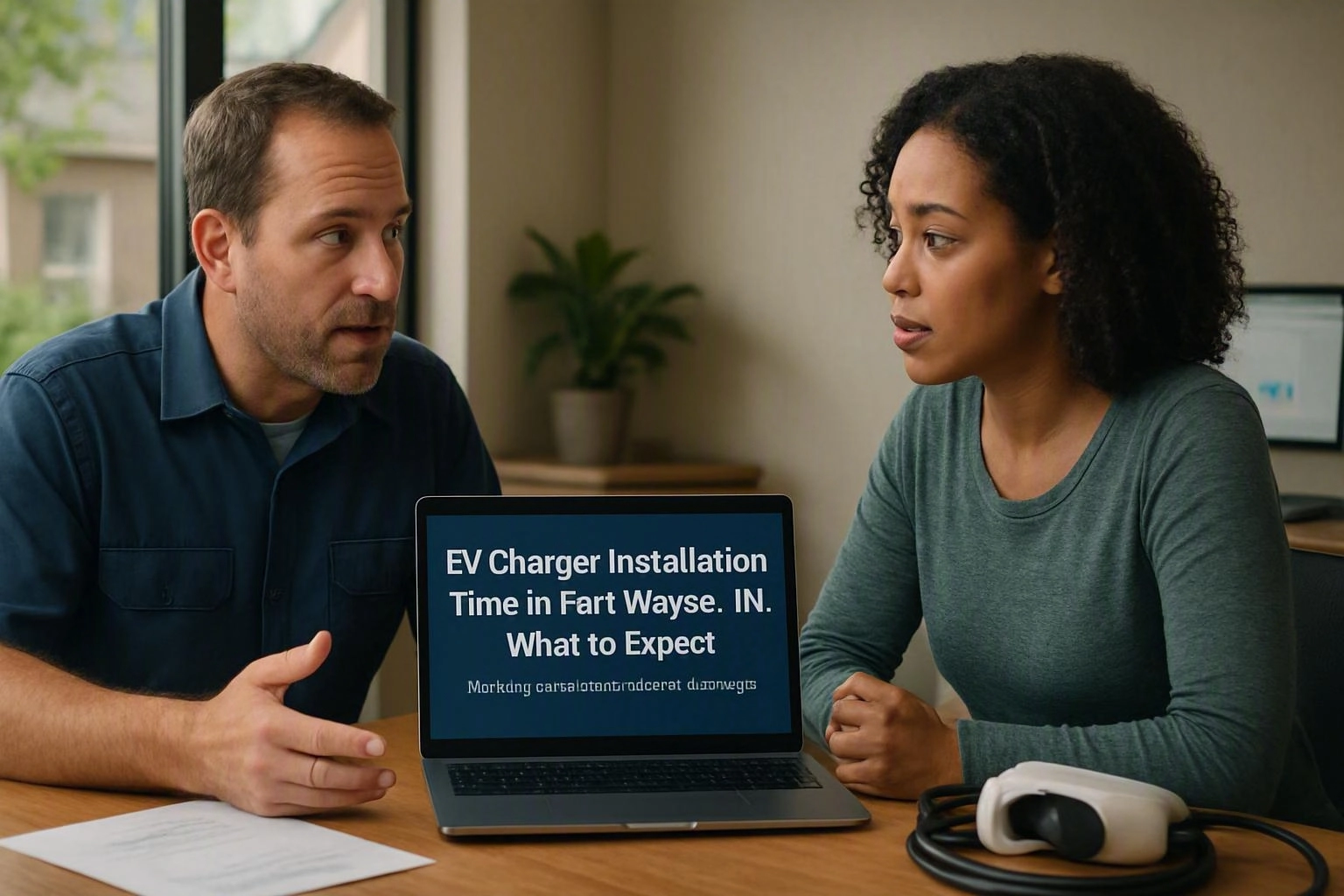
Dedicated Circuit Installation gives the charger its own branch circuit. It doesn't share power with other household outlets. The breaker and wires must match the charger and home service.
A load calculation should guide this choice. A panel upgrade may take one day or longer. Permits and inspections may also delay final charger use.
How Fort Wayne Conditions Can Affect the Installation Schedule?
Fort Wayne, in weather can affect outdoor EV charger work. Cold weather can slow trenching and outdoor conduit work. Garage projects often avoid these ground delays.
Frozen ground can slow underground wiring and outdoor equipment work. A garage setup may avoid that issue. The garage layout still affects cable access and weather exposure.
Fort Wayne homes include many older properties. Some have limited panel space or hard-to-reach wiring. These conditions can lengthen the first check and planning stage.
A permit and inspection can add calendar time after electrical work ends. Confirm local electrical rules before scheduling. The work may finish before final approval arrives.
How to Prepare for a Faster EV Charger Installation?
Homeowners can help shorten EV charger installation time. Choose the charger site and keep the panel easy to reach. Share the charger details before the appointment. This helps the electrician plan the circuit and wire route.
These steps help our team bring the right materials. They also reveal problems early. You can then compare a standard job with a hardwired EV charger installation.
Questions About Electrician
Can an Electrician Install an EV Charger in One Day?
Yes. An electrician can often finish in one day when the panel has capacity and the route is accessible. Complex projects may take longer.
Does Installing an EV Charger Require a Dedicated Circuit?
Most Level 2 home chargers require a dedicated circuit. The circuit needs proper wires, a compatible breaker, and the right safety protection.
Do I Need a Permit to Install an EV Charger in Fort Wayne, IN?
Permit and inspection rules depend on the property, equipment, and electrical work. Confirm current Fort Wayne, in rules before scheduling. Approval may take longer than the physical installation.
Our team can check the electrical system, charger site, wire route, and service capacity.
Related Resources
Whole-Home Rewiring: Cost, Timeline, and What to Expect
whole house rewiring cost Fort Wayne IN
What It CostsEV Charger Installation in Fort Wayne: Cost, Panel Requirements, and Process
EV charger installation cost Fort Wayne IN
What It CostsHot Tub and Pool Electrical Wiring: Cost, Scope, and Scheduling
hot tub and pool electrical wiring cost Fort Wayne
How It WorksHeat-Pump Electrical Hookups: Circuits, Panel Capacity, and Installation
heat pump electrical hookup and panel upgrade Fort Wayne